Finding the right Bible reference can make study faster, clearer, and more rewarding. The best bible dictionaries help you understand people, places, words, and events without slowing you down.
Below, we’ve rounded up 10 strong options for different readers, from compact study aids to more comprehensive one-volume references.
Best 10 Bible Dictionaries Picks for 2026
Illustrated all-purpose reference
Holman Illustrated Bible Dictionary

- Over 6,500 articles from Aaron to Zuzite
- About 700 full-color photos, maps, charts, and reconstructions
- Concise definitions with fuller topic development
Best For: Bible students, teachers, pastors, and everyday readers
Classic word-study tool
Vine's Complete Expository Dictionary

- Over 6,000 key biblical words
- Dictionary, commentary, and concordance in one volume
- Includes Strong's numbering system
Best For: Students, pastors, and readers focused on biblical word studies
Visual comprehensive reference
Zondervan Illustrated Bible Dictionary

- More than 7,200 entries
- 75 full-color maps and over 500 images
- Covers historical, archaeological, and theological context
Best For: Pastors, teachers, students, and general Bible readers
Updated classic reference
The New Unger's Bible Dictionary

- More than 67,000 entries
- Includes essays, photos, maps, charts, and illustrations
- Cross-references work with major Bible translations
Best For: Readers wanting a large, expanded Bible dictionary with broad coverage
Scholarly Reference

- 1,000+ in-depth articles
- Thousands of cross-references
- Hundreds of visuals and maps
Best For: Sermon prep and in-depth Bible study
Visual Study Aid
Nelson's Illustrated Bible Dictionary

- 7,000+ entries
- 500+ full-color visuals
- Enlarged type size
Best For: Image-rich study and quick reference
Compact Reference
Zondervan Compact Bible Dictionary
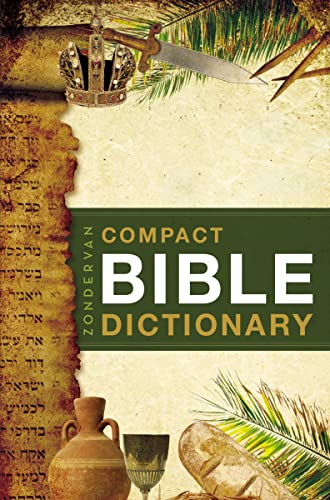
- Over 6,000 entries
- Portable pocket-size format
- Maps, illustrations, and book summaries
Best For: Portable study for students and teachers
Compact Visual Bible Reference

- Easy-to-carry size for study and group use
- Clear definitions for people, places, objects, and events
- Full-color maps, photos, and reconstructions throughout
Best For: Beginners and visual learners who want a portable reference
Large-Entry Study Companion
The New Combined Bible Dictionary and Concordance

- More than 10,000 Bible-related entries
- Covers names, places, objects, and concepts
- Includes an essay on how to study the Bible
Best For: Readers wanting a thorough, study-focused reference
Student-Friendly Bible Guide

- Updated edition with a fresh layout and design
- Hundreds of concise definitions for Bible study
- Color charts, maps, photos, and illustrations included
Best For: Teens, students, and families who want an approachable Bible reference
Illustrated all-purpose reference – Holman Illustrated Bible Dictionary
If you want bible dictionaries that make Scripture easier to understand without requiring advanced training, the Holman Illustrated Bible Dictionary is a strong all-purpose choice. It offers over 6,500 articles with concise definitions and fuller explanations, plus maps, photos, charts, and reconstructions that help bridge the gap between the biblical world and modern readers.
Best For: Bible students, teachers, pastors, and everyday readers who want a clear, visual, and dependable reference for personal study or lesson prep.
Pros:
- Over 6,500 articles covering people, places, and themes from Aaron to Zuzite
- Concise entries that expand into thorough background and interpretation help
- About 700 full-color photos, maps, charts, and reconstructions
- Up-to-date archaeological information for deeper biblical context
Cons:
- Large reference volume, so it is less portable than a smaller study aid
- Designed for broad coverage, so it is not a specialized word-study tool
Overall, this edition stands out as a practical one-volume reference for readers who want broad coverage and strong visual support. It is especially useful when you need quick clarity on biblical terms, places, and background details.
Classic word-study tool – Vine's Complete Expository Dictionary
Vine's Complete Expository Dictionary of Old and New Testament Words: Super Value Edition
Check Price On AmazonAmong bible dictionaries focused on word meaning, Vine’s Complete Expository Dictionary is built for readers who want to study biblical terms in the original languages without years of Greek or Hebrew training. It combines dictionary, commentary, and topical concordance features in one affordable volume, making it a useful companion for deeper Bible study.
Best For: Students, pastors, and curious readers who want a practical tool for biblical word studies and original-language insight.
Pros:
- Covers more than 6,000 key biblical words
- Explains word frequency, usage, and meaning in a study-friendly format
- Functions as a dictionary, commentary, and topical concordance in one
- Includes the Strong’s numbering system for cross-reference support
Cons:
- Best suited to word studies rather than broad Bible background research
- Older edition, so the presentation is more classic than visually updated
This is a solid pick if your main goal is to dig into the meaning of biblical words efficiently. It is especially appealing for readers who want a trusted reference that stays focused on language and usage.
Visual comprehensive reference – Zondervan Illustrated Bible Dictionary
If you prefer bible dictionaries that combine depth with strong visual support, the Zondervan Illustrated Bible Dictionary is built to help. It includes more than 7,200 entries, full-color maps and images, and up-to-date scholarship that explains the historical, archaeological, geographical, and theological world of Scripture.
Best For: Pastors, Sunday school teachers, students, and general Bible readers who want a comprehensive, image-rich one-volume dictionary.
Pros:
- More than 7,200 entries with broad coverage
- Includes 75 full-color maps and over 500 photographs, charts, and illustrations
- Built from the Zondervan Pictorial Encyclopedia of the Bible
- Cross-referenced to the King James Version and based on the NIV
Cons:
- Large, heavy reference book that is better for desk use than carrying around
- Broad scope may be more than casual readers need
This volume is a strong option when you want a one-book reference that is both thorough and visually engaging. It works well for readers who want context they can actually see while studying the Bible.
Updated classic reference – The New Unger's Bible Dictionary
The New Unger’s Bible Dictionary is a time-tested choice among bible dictionaries for readers who want a broad reference with current scholarship. With more than 67,000 entries, detailed essays, photos, maps, charts, and cross-references, it gives you a substantial amount of background for studying Scripture in context.
Best For: Readers who want a long-standing, expanded Bible dictionary with extensive entries and helpful visual aids.
Pros:
- More than 67,000 entries for extensive reference coverage
- Updated and expanded by respected Bible authorities
- Includes detailed essays, colorful photography, maps, charts, and illustrations
- Cross-references make it useful with all major Bible translations
Cons:
- Very large volume, so it may feel more like a library reference than a quick carry-along book
- Based on the NASB, which may not be the preferred base text for every reader
For readers who want a substantial reference work with a classic reputation, this edition offers impressive depth. It is especially useful when you need broad lookup power and translation flexibility in one book.
Scholarly Reference – Tyndale Bible Dictionary
If you want a Bible dictionary that blends depth with accessibility, the Tyndale Bible Dictionary is a strong all-around choice. It draws on the work of 139 Bible scholars and offers more than 1,000 in-depth articles, plus cross-references, maps, pictures, and illustrations to help make Bible study more practical and connected.
Best For: Sermon prep, Bible study, and readers who want broad evangelical scholarship in a single-volume reference.
Pros:
- More than 1,000 informative articles covering biblical topics in depth
- Thousands of cross-references for moving between related subjects quickly
- Hundreds of pictures, maps, and illustrations for added context
- Covers manuscripts, theology, ancient cultures, and Bible book overviews
Cons:
- Large and heavy, so it is not the most portable option
- Best suited to readers who want substantial reference content rather than a compact guide
This is a dependable choice if you want a serious study tool that still stays approachable. Among Bible dictionaries, it stands out for its mix of scholarly breadth, visual support, and usability for both personal and teaching-focused study.
Visual Study Aid – Nelson's Illustrated Bible Dictionary
For buyers comparing Bible dictionaries, Nelson’s Illustrated Bible Dictionary is a strong pick if you value visuals and a large entry count. This new and enhanced edition includes more than 7,000 entries, updated full-color photographs, maps, charts, timelines, graphics, and pronunciation guides, making it useful for study at many levels.
Best For: Readers who want a comprehensive, image-rich Bible reference with easy-to-read formatting.
Pros:
- More than 7,000 up-to-date entries for broad reference coverage
- Over 500 full-color photographs, maps, charts, and graphics
- Enlarged type size for easier reading
- Cross-references to all major translations
Cons:
- Heavier than a compact reference book
- Strong visual emphasis may be more than some readers need
This edition is a practical fit for anyone who wants a reference work that is both thorough and easy to navigate. Its combination of updated content and abundant visuals makes it especially helpful for study that benefits from images and quick lookup.
Compact Reference – Zondervan Compact Bible Dictionary
Zondervan Compact Bible Dictionary: A-to-Z Pocket Dictionary with Over 5,000 Entries
Check Price On AmazonIf you need a smaller Bible dictionary without giving up useful content, the Zondervan Compact Bible Dictionary is built for convenience. It offers more than 6,000 entries, concise definitions, summaries of Bible books, archaeological information, and hundreds of illustrations and maps in a portable format.
Best For: Laypersons, students, teachers, and pastors who want a compact, easy-to-use Bible reference.
Pros:
- Over 6,000 entries covering people, places, events, and concepts
- Portable size that is easier to carry than full-size reference books
- Includes maps, illustrations, and summaries of Bible books
- Conservative scholarship with broad usefulness
Cons:
- Fewer entries than larger Bible dictionaries
- Less detailed than full-size reference volumes
This is a smart pick when space, portability, and quick access matter. Among Bible dictionaries, it offers a useful balance of breadth and compact design for everyday study and teaching.
Compact Visual Bible Reference – Ultimate Bible Dictionary
If you want bible dictionaries that are easy to carry and quick to use, this compact reference is built for straightforward lookups during personal study, group discussion, or reading along with your Bible. It focuses on biblical people, places, objects, and events, and adds visual context with maps, photos, and reconstructions placed alongside the entries.
Best For: Beginners, visual learners, and anyone who wants a portable Bible dictionary with clear definitions and helpful imagery.
Pros:
- Concise, accessible definitions make it beginner-friendly.
- Hundreds of full-color maps, photos, and reconstructions add context.
- Compact size is easy to carry for study at home, church, or class.
- Covers people, places, objects, and events in the Bible.
Cons:
- May feel too brief for readers who want deeper technical detail.
- Best suited to quick reference rather than exhaustive study.
Overall, this is a practical choice if you want a visual, easy-to-handle Bible dictionary that supports everyday reading without overwhelming the user with complexity.
Large-Entry Study Companion – The New Combined Bible Dictionary and Concordance
For shoppers comparing bible dictionaries, this combined reference stands out for its sheer volume of entries and its added concordance-style usefulness. With more than 10,000 entries defining names, places, objects, and concepts, it is designed for readers who want thorough references and a more study-oriented tool.
Best For: Readers who want a broad, entry-rich Bible reference with a built-in study aid approach.
Pros:
- More than 10,000 entries provide wide coverage.
- Includes names, places, objects, and concepts of the Bible.
- Contains an introductory essay on “How to Study the Bible.”
- Good fit for readers seeking thorough references.
Cons:
- Older reprint may feel less modern than updated alternatives.
- Heavier and larger than compact carry-friendly options.
This is a solid pick if you value quantity of entries and a more detailed reference style, especially when you want a dictionary that also supports broader Bible study habits.
Student-Friendly Bible Guide – The Student Bible Dictionary
If you’re looking through bible dictionaries for a student-friendly option, this updated edition is designed to make Bible terms and background information approachable. It defines hundreds of words, names, places, and concepts, while color charts, maps, photographs, and illustrations help make the material easier to understand.
Best For: Students of all ages, especially teens, who want a clear and visually engaging Bible dictionary.
Pros:
- Updated and newly designed edition with refreshed visuals.
- Hundreds of clear, concise definitions for Bible study.
- Color charts, maps, photographs, and illustrations support learning.
- Simple enough for late elementary use, yet complete enough for adults.
Cons:
- 304 pages may be less extensive than larger reference works.
- Focused on accessibility, so advanced readers may want more depth.
This is a strong all-around choice for students and families who want an easy-to-use dictionary with a modern layout and plenty of visual support.
How We Picked These Bible Dictionaries
We focused on the features that matter most to everyday readers, students, teachers, and church leaders. That includes entry count, clarity of definitions, coverage of biblical names and topics, layout, portability, and overall value. We also looked for a mix of concise and in-depth Bible Dictionaries so you can match the book to your study style.
Quick Comparison: Which Type Fits Your Needs?
If you want broad background and detailed articles, choose a full-size illustrated reference. If you mainly need fast lookups during study or lesson prep, a compact or student-focused dictionary is usually enough. Word-study readers may prefer a specialized expository title, while readers who want a simple all-purpose tool may do best with a balanced general reference.
Key Buying Factors for Bible Dictionaries
Scope and Depth
Some Bible Dictionaries emphasize short, practical entries; others provide longer articles, maps, charts, and cross-references. More depth is helpful for teaching and sermon prep, but a smaller book may be easier for daily reading and quick checks.
Study Focus
Choose a dictionary that matches your main goal. For word studies, look for expository or original-language emphasis. For survey-style study, a general illustrated dictionary may be more useful. For new believers or younger readers, simpler explanations and accessible language matter most.
Format and Usability
Large print, clear headings, and strong organization can make a big difference. If you plan to carry it to class or church, size and weight matter. Digital-friendly indexing and cross-references also make lookup faster.
Reference Extras
Illustrations, maps, timelines, and concordance-style tools add value if you want one book to do more. Just remember that extra features should support readability, not make the book harder to use.
Who Should Buy Which Bible Dictionaries?
Choose a comprehensive bible dictionary if you want a long-term reference for preaching, teaching, or serious study. Pick a compact edition if you need quick answers on the go. Students and new readers will usually benefit from a more approachable dictionary with simpler explanations, while advanced users may want a more detailed scholarly volume.
If you want the best balance overall, look for a title that combines accurate entries, easy navigation, and enough depth to grow with your study habits.