The best Bible atlases for homeschool make geography, history, and Scripture easier to understand by connecting biblical events with real places, routes, regions, and cultures.
This roundup compares 10 options for different ages and teaching styles, including illustrated children’s atlases, student-friendly references, chronological map collections, and more detailed works for high school or adult-led study.
Best 10 Bible Atlases for Homeschool Picks for 2026
Best Bible Story Companion

- Colorful maps and Bible illustrations
- Covers major people, places, and events
- Designed for ages 8–12
Best For: Visual Bible study in elementary homeschool lessons
Best First World Atlas
Indescribable Atlas Adventures
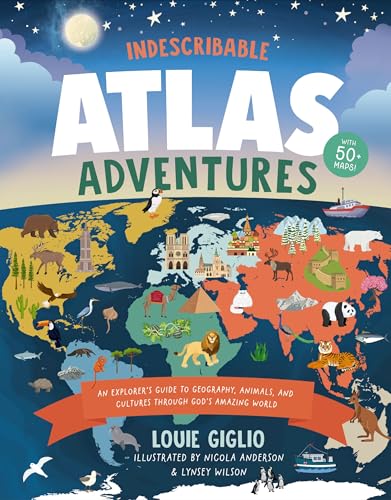
- More than 50 infographic maps
- Covers seven continents and 50+ countries
- Includes Christian reflections and Bible verses
Best For: Early world geography with a Christian perspective
Best Hands-On Bible Geography

- Uses transparent modern-map overlays
- Includes Bible maps, charts, and timelines
- Spiral-bound and reproducible for classrooms
Best For: Detailed homeschool Bible geography and reference lessons
Best Christian World Geography

- Combines geography, science, and Christian history
- Includes continent maps and country data
- Designed as curriculum and reference material
Best For: Integrated elementary Christian geography studies
Best Visual Timeline Atlas

- More than 100 maps, photos, and diagrams
- Chronological coverage of both Testaments
- Includes timelines and Holy Land photography
Best For: Visual, chronological Bible geography study
Best Budget-Friendly Student Atlas

- 30 colorful maps across both Testaments
- Includes an index of place names
- Features a Middle East archaeology guide
Best For: Younger students and introductory lessons
Best In-Depth Reference Atlas
The New Moody Atlas of the Bible

- 118 detailed full-color maps
- Over 100,000 words of commentary
- Includes indexes and 800+ endnotes
Best For: Advanced homeschool reference and teacher use
Best Visual Bible Atlas for Kids

- Ages 9–12 and grades 4–7
- Illustrated maps and Bible events
- Includes Old and New Testament coverage
Best For: Visual learners in elementary and early middle school
Best In-Depth Homeschool Reference

- 352-page hardcover reference
- Full-color maps and photographs
- Connects geography, culture, and timelines
Best For: Older students and family Bible study
Best Compact Historical Atlas

- 36-page compact reproduction
- Preserves original graphical elements
- Useful as a supplementary reference
Best For: Brief historical Bible-study supplements
Best Bible Story Companion – Children's Bible Atlas
For families comparing bible atlases for homeschool, this illustrated option is designed to help children ages 8–12 visualize the people, places, and events they encounter in Scripture. Its colorful artwork, maps, and facts make it a practical companion for elementary Bible reading and geography lessons.
Best For: Homeschool students in grades 2–7 who benefit from visual Bible-study materials.
Pros:
- Includes hundreds of colorful pictures, maps, and facts.
- Covers Bible topics such as Jesus’ life, Paul’s missionary travels, Abraham’s journeys, and the Exodus.
- Its 96-page format offers focused, approachable lessons for children.
Cons:
- Its reading age and grade range make it less suitable for older students.
- It focuses on Bible geography rather than a broad world-atlas curriculum.
This is a strong pick when the goal is to make Bible narratives easier for children to picture and remember. It also pairs naturally with The Complete Illustrated Children’s Bible.
Best First World Atlas – Indescribable Atlas Adventures
This choice stands out among bible atlases for homeschool because it combines world geography with Christian reflection. More than 50 infographic maps, 1,500 facts, and country-by-country features give younger students an accessible introduction to continents, cultures, animals, and global communities.
Best For: Curious children ages 6–10 beginning world geography through a Christian worldview.
Pros:
- Explores all seven continents and more than 50 countries.
- Includes facts about terrain, wildlife, languages, population, food, and notable people.
- Adds devotional thoughts, prayers, and Bible verses to geography topics.
- Large trim size supports viewing maps and details.
Cons:
- It is primarily a world atlas, not an atlas focused on biblical lands.
- The content may be introductory for older homeschool students.
Choose this atlas if your homeschool needs a visually engaging geography resource with Christian connections. Its broad coverage makes it useful for early world-study units rather than detailed Bible-map work.
Best Hands-On Bible Geography – Deluxe Then and Now Maps
For families seeking bible atlases for homeschool with a more study-oriented format, this expanded edition connects biblical locations with modern geography. Relief maps, transparent overlays, timelines, and spiral binding make it especially practical for lessons, reference work, and group instruction.
Best For: Homeschool Bible studies that need detailed maps, modern-location comparisons, and reproducible classroom material.
Pros:
- Eight clear plastic overlays place modern cities and countries over Bible maps.
- Includes maps, charts, and timelines covering both Old and New Testament topics.
- Features routes and locations connected with Jesus, Paul, David, Ruth, and other Bible figures.
- Spiral binding allows pages to lie flat, and pages are reproducible for classroom use.
Cons:
- At 66 pages, it is more concise than many full-length atlases.
- The detailed reference format may require parent guidance for younger students.
This is the most explicitly homeschool-ready option in the group, particularly if you value map comparison and reusable lesson materials. It is a focused Bible geography reference rather than a general world atlas.
Best Christian World Geography – Atlas of God's World
This large-format option broadens the idea of bible atlases for homeschool by combining geography, creation-focused science, Christian history, and world cultures. It is designed as both an elementary curriculum resource and a reference tool, with continent maps, country data, and profiles of missionaries and Christian history makers.
Best For: Elementary homeschool programs seeking an integrated Christian geography and world-studies resource.
Pros:
- Explores continents, countries, cultures, landmarks, ecosystems, and biomes.
- Includes information about Christian explorers, missionaries, and history makers.
- Connects geographic features with the Flood, plate tectonics, volcanic activity, and creation-focused themes.
- Provides country details covering traditions, holidays, legal systems, and industries.
Cons:
- Its emphasis is global geography and Christian worldview rather than Bible-location mapping.
- The 2.2-pound, large-format design may be less convenient for portable study.
Consider this atlas when you want one visually engaging resource to support geography, culture, science, and Christian history. It offers more curriculum breadth than a narrowly focused Bible atlas.
Best Visual Timeline Atlas – Illustrated Bible Maps
For homeschoolers seeking bible atlases for homeschool, Illustrated Bible Maps offers a visual, chronological tour through the Old and New Testaments. Its combination of more than 100 maps, photos, diagrams, and concise period timelines makes it useful for connecting biblical events with geography and historical context.
Best For: Homeschool families wanting a richly illustrated atlas that follows the Bible’s major events in chronological order.
Pros:
- Includes more than 100 Bible maps and illustrations.
- Traces subjects such as the Exodus, David and Goliath, Psalms locations, and Paul’s missionary journeys.
- Features Holy Land photography and concise timelines in each chapter.
Cons:
- Its visual, introductory format may provide less extensive scholarly documentation than a larger reference atlas.
- At 184 pages, it may not offer the depth of a 300-page atlas.
This is a strong choice when visual learning and chronological organization matter most. It gives students plenty to explore without requiring them to work through an especially technical reference volume.
Best Budget-Friendly Student Atlas – The Student Bible Atlas
The Student Bible Atlas is a compact option for families comparing bible atlases for homeschool, especially when age-appropriate presentation and affordability are priorities. It provides 30 maps covering the Old and New Testaments, plus a place-name index and a guide to major Middle East archaeological sites.
Best For: Younger students and homeschool lessons that need a concise, accessible introduction to biblical geography.
Pros:
- Written for Bible students of various ages and interests.
- Includes 30 colorful maps covering both Testaments.
- Adds a place-name index and an archaeology-site guide.
Cons:
- Its 32-page length offers less coverage than the other atlases in this roundup.
- It may be too brief for advanced students seeking extensive commentary or geographic detail.
With a revised layout and clear presentation, this atlas works well as a starter resource or quick lesson companion. Its listed reading age of 9–12 years and preschool–2 grade-level designation make it particularly suited to younger homeschool learners.
Best In-Depth Reference Atlas – The New Moody Atlas of the Bible
For homeschoolers who want bible atlases for homeschool with substantial reference depth, The New Moody Atlas of the Bible combines detailed geography with biblical teaching. It includes 118 full-color maps, extensive commentary, photography, indexes, and more than 800 endnotes.
Best For: Older students, parents, and teachers who want a detailed atlas for ongoing Bible geography and history study.
Pros:
- Offers 118 full-color, digitized maps of Bible lands and surrounding regions.
- Provides more than 100,000 words of commentary and substantial geographic detail.
- Includes indexes and more than 800 endnotes for further reference.
- Explicitly identified as useful for home school teachers as well as Bible college and seminary students.
Cons:
- Its extensive commentary may be more than younger students need.
- At 304 pages and 3.76 pounds, it is less compact than the student-focused option.
This is the strongest pick for a homeschool reference shelf rather than a brief workbook companion. Its breadth and documentation can support repeated use across Bible, history, and geography lessons, particularly with older learners.
Best Visual Bible Atlas for Kids – DK Pictorial Bible Atlas
For families comparing bible atlases for homeschool, The Bible Atlas: A Pictorial Guide to the Holy Lands offers an accessible, map-centered introduction for children ages 9–12. Its illustrated pages connect Old and New Testament events with locations, people, and historical context.
Best For: Homeschool students in grades 4–7 who learn well through maps, illustrations, and concise explanations.
Pros:
- Designed specifically for children ages 9–12.
- Includes maps covering biblical events and journeys.
- Combines illustrations, photos, story summaries, and cultural context.
- Covers both the Old and New Testaments, including Paul’s travels.
Cons:
- At 64 pages, it offers less depth than a comprehensive reference atlas.
- The child-focused presentation may be too introductory for older students.
This is a strong choice when you want a visually engaging supplement for elementary or early middle-school Bible lessons rather than a detailed academic reference.
Best In-Depth Homeschool Reference – Discovery House Bible Atlas
Among bible atlases for homeschool, the Discovery House Bible Atlas stands out as a substantial reference for lessons that connect Scripture with geography, history, and culture. It uses commentary, vivid photographs, and full-color maps to explore the biblical landscape.
Best For: Older homeschool students, family Bible study, and parents seeking a detailed visual reference.
Pros:
- Provides 352 pages of commentary, photographs, and maps.
- Connects biblical locations with cultural language and timelines.
- Explores the historical and geographical significance of Israel and the Bible.
- Hardcover format suits repeated home reference use.
Cons:
- Its depth and 3.6-pound weight may be more than younger students need.
- The supplied details do not specify a recommended reading age or grade level.
This atlas is the most robust option in the group for families wanting a long-form resource that can support discussion, research, and close reading of biblical passages.
Best Compact Historical Atlas – Standard Bible Atlas
For homeschool families interested in historical Bible-study materials, Standard Bible Atlas is a compact 36-page reproduction of a culturally important public-domain work. Its small format makes it easy to add to a lesson shelf or use alongside other resources.
Best For: Families seeking a brief historical atlas or a supplementary source for discussions about older Bible-reference materials.
Pros:
- Compact 6.14-by-9.21-inch format is easy to store.
- Short 36-page length can fit into focused study sessions.
- Presented as a proofread reproduction with original graphical elements.
- Public-domain source has historical preservation value.
Cons:
- The supplied description does not provide a recommended age, grade level, or modern teaching features.
- Its brief length may not provide enough context for a standalone homeschool curriculum.
- The historical reproduction format may feel less accessible than a contemporary atlas.
Choose this edition as a concise historical supplement, especially if your homeschool values primary or preserved reference works; pair it with a modern Bible atlas for broader instructional support.
How We Picked the Best Bible Atlases for Homeschool
We looked for resources that support actual homeschool lessons rather than functioning only as decorative reference books. Key considerations included map clarity, historical and geographic context, age appropriateness, visual appeal, ease of use, and usefulness across repeated lessons. We also considered whether each atlas works well independently, with read-aloud instruction, or alongside a Bible curriculum.
The selection spans introductory picture books, broad world-and-Bible geography resources, map-focused references, and more academic atlases. Because homeschool families often teach multiple ages at once, variety matters: a strong choice for an elementary student may not provide enough depth for middle or high school work.
Quick Comparison
| Best for | Look for |
|---|---|
| Young children | Large illustrations, short explanations, and engaging visual storytelling |
| Elementary Bible lessons | Clear maps, timelines, facts, and connections to familiar Bible stories |
| Multi-age homeschool use | Accessible explanations plus enough detail for discussion and review |
| Older students | Historical context, regional detail, place-name references, and more advanced mapping |
| Map practice | Well-labeled maps that can be revisited during weekly lessons |
Key Buying Factors for Bible Atlases for Homeschool
Age and Reading Level
Choose an atlas your student can actually use. Younger learners benefit from pictures, concise captions, and story-based explanations. Older students may need denser text, more historical background, and maps that support independent research.
Map Quality and Coverage
Check whether the atlas covers the locations and periods your curriculum teaches. Useful features may include maps of ancient kingdoms, missionary journeys, tribal territories, major routes, Jerusalem, and the Holy Land in different historical eras. Clear labels and readable legends are more valuable than an overwhelming number of maps.
Visual and Teaching Features
Illustrations, photographs, timelines, diagrams, indexes, fact boxes, and pronunciation help can make an atlas easier to use. For younger children, visual appeal supports engagement; for older students, indexes and cross-references improve research.
Depth and Curriculum Fit
Match the atlas to your teaching plan. A simple reference may be ideal for family read-alouds, while a detailed atlas can support geography, history, literature, or theology assignments. Confirm that the tone and interpretive approach fit your family’s curriculum and preferences.
Who Should Buy Which Bible Atlases for Homeschool?
Families teaching early elementary students should prioritize an illustrated, approachable atlas with short explanations and plenty of pictures. Elementary students ready for more geography can benefit from resources that combine Bible locations with broader information about lands, animals, and cultures.
For a multi-age household, choose a visually accessible book that still offers enough facts and maps for parent-led discussion. Students in middle or high school are better served by a more detailed student or reference atlas, especially when they need to compare historical periods, trace journeys, or complete independent projects.
If your main goal is quick map access during Bible lessons, select a focused map collection. If you want a long-term reference for geography and historical study, favor broader coverage, a strong index, and more substantial explanatory text. The best Bible Atlases for Homeschool are the ones that match your student’s age, your curriculum’s depth, and how often your family will return to the maps.