Finding the right cello material can make practice more focused and performances more rewarding. This roundup brings together 10 strong options for intermediate players, including classical solos, recital selections, seasonal favorites, and ensemble arrangements.
Whether you want to build technique, prepare a program, or play with friends, these books offer practical ways to expand your repertoire while matching different interests and playing situations.
Best 10 Cellos for Intermediate Players Picks for 2026
Classical Repertoire Builder
Fifty Famous Classical Themes for Cello

- 50 recognizable classical themes
- Easy and intermediate solo arrangements
- Chord changes for accompaniment
Best For: Students and teachers building a classical repertoire
Holiday Song Collection

- 101 seasonal selections
- Accessible solo arrangements
- Includes carols and holiday hits
Best For: Holiday concerts, gatherings, and seasonal practice
Collaborative Practice Pick
Intermediate Classic Duets for Violin and Cello

- 22 classical and traditional duets
- Parts suited to equal intermediate players
- Many pieces use first position
Best For: Lessons, friends, and violin-cello ensemble practice
Broadway Expression Choice
The Phantom of the Opera Cello Solos

- Nine musical theater solos
- Arranged for intermediate cellists
- Emphasizes dramatic expression
Best For: Theater fans, recitals, and expressive solo practice
Best Mixed-String Duet Book
Intermediate Viola and Cello Duets

- 22 classical and traditional pieces
- Tune-sharing parts for both players
- Mostly easy keys; many first-position pieces
Best For: Intermediate cello and viola duets
Best Holiday Collection
The Piano Guys Christmas for Cello

- 10 classical-pop Christmas arrangements
- Optional pull-out cello score
- Designed for recitals, worship, or home playing
Best For: Intermediate holiday piano-cello performances
Best Clarinet-Collaboration Book
Intermediate Clarinet and Cello Duets

- 22 classical and traditional melodies
- Tune-sharing parts for clarinet and cello
- Cello parts explore different positions
Best For: Intermediate cello-clarinet duet partners
Repertoire Builder

- 17 classical recital and contest pieces
- Selections progress by difficulty
- Includes fingerings, bowings, and piano parts
Best For: Intermediate students building solo repertoire
Mixed-Ensemble Choice

- 22 classical and traditional arrangements
- Melody alternates between the parts
- Mostly easy keys with varied difficulty
Best For: Intermediate cello players performing with a flutist
Two-Cello Pick
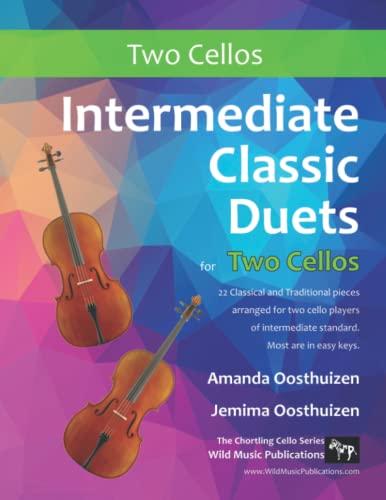
- 22 classical and traditional pieces
- Written for similarly skilled players
- Melody passes between the two cello parts
Best For: Intermediate cellists practicing and performing in pairs
Classical Repertoire Builder – Fifty Famous Classical Themes for Cello
Fifty Famous Classical Themes for Cello: Easy and Intermediate Solos for the Advancing Cello Player
Check Price On AmazonFor cellists comparing cellos for intermediate players, this 55-page collection offers a practical way to expand classical repertoire. It includes 50 recognizable themes arranged as easy and intermediate solos, with chord changes for teacher-provided accompaniments.
Best For: Advancing students, teachers, and players who want a broad introduction to essential classical melodies.
Pros:
- Includes 50 themes from celebrated classical works.
- Offers easy and intermediate solo arrangements.
- Chord changes support accompaniment in lessons or practice.
Cons:
- Focuses on short themes rather than complete works.
- Primarily suited to classical repertoire.
This is a strong repertoire sampler for intermediate cellists who value variety and familiar melodies. Its teacher-friendly accompaniment information adds flexibility for guided study.
Holiday Song Collection – 101 Christmas Songs for Cello
Among cello resources for intermediate players, this 96-page Hal Leonard songbook stands out for seasonal variety. It combines traditional carols and modern holiday favorites in accessible solo arrangements for beginners and intermediate cellists.
Best For: Cellists preparing holiday concerts, family performances, seasonal practice, or a festive gift collection.
Pros:
- Provides 101 Christmas songs in one volume.
- Includes familiar titles such as “Silent Night,” “Jingle Bells,” and “White Christmas.”
- Arrangements are designed for beginner and intermediate players.
Cons:
- Its repertoire is limited to holiday music.
- The large song count may offer less depth per individual piece.
This is a useful seasonal addition rather than an all-purpose method book. Its extensive song list makes it convenient for players who need many recognizable holiday selections.
Collaborative Practice Pick – Intermediate Classic Duets for Violin and Cello
For cellists seeking cello music for intermediate players with a social angle, this 35-page duet book pairs cello with violin. Its 22 classical and traditional pieces are arranged for equal intermediate players, around Grade 4-plus, with many in easy keys and first position.
Best For: Lessons, ensemble practice, playing with friends, or informal performances with a violinist at a similar level.
Pros:
- Designed for equal intermediate violin and cello players.
- Both players get opportunities to play the melody.
- Includes varied classical and traditional selections, from slow to fast.
- Many pieces use easy keys and first position.
Cons:
- Requires access to a violin partner for the full duet experience.
- Some selections are described as tricky and may require extra work.
This book is especially appealing for intermediate cellists who want to develop listening and ensemble skills. The balanced parts make it more collaborative than a typical solo collection.
Broadway Expression Choice – The Phantom of the Opera Cello Solos
For cellists comparing cello books for intermediate players, this collection offers a focused alternative to classical study. It contains nine instrumental solo arrangements from The Phantom of the Opera, including “The Music of the Night,” “Think of Me,” and the title theme.
Best For: Intermediate cellists who enjoy musical theater, expressive solo playing, recitals, or popular-song repertoire.
Pros:
- Features nine recognizable themes from the Broadway musical.
- Arrangements are adapted for intermediate cello players.
- Supports work on dramatic expression and tone control.
Cons:
- Contains only nine songs.
- Repertoire is limited to one musical.
- At 16 pages, it offers less volume than the larger songbooks in this roundup.
This is a targeted choice for players motivated by theatrical music and expressive performance. It works well as a supplement to a broader method or repertoire collection.
Best Mixed-String Duet Book – Intermediate Viola and Cello Duets
For cellos for intermediate players, this collection offers a practical way to develop ensemble skills with a viola partner. Its 22 classical and traditional selections are aimed at players around Grade 4 and above, with mostly easy keys and many pieces playable in first position.
Best For: Intermediate cello and viola players who want varied duet material for lessons, informal playing, or family performances.
Pros:
- Includes 22 classical and traditional melodies.
- Both players get opportunities to play the tune.
- Offers a mix of slow, fast, easier, and more challenging pieces.
- Many selections are one page and in accessible keys.
Cons:
- Some pieces are described as tricky for Grade 4-plus players.
- The cello part is intended for a viola partner rather than solo practice.
This is a strong choice when your priority is interactive playing rather than a solo repertoire book. The varied difficulty and repeated melody-sharing can encourage listening and musical coordination.
Best Holiday Collection – The Piano Guys Christmas for Cello
Cellos for intermediate players can be more engaging when the repertoire feels familiar, and this book provides 10 cinematic classical-pop Christmas arrangements. The optional pull-out cello score lets a cellist perform with the piano or use the arrangements in recitals, worship settings, and home performances.
Best For: Intermediate cellists seeking seasonal duet repertoire with a pianist for holiday performances or practice.
Pros:
- Includes 10 recognizable Christmas selections.
- Provides an optional cello part alongside the piano arrangements.
- Suitable for home performances, church services, and festive recitals.
- Professional notation and layout support practice and performance.
Cons:
- The repertoire is exclusively holiday-focused.
- It is most useful when a pianist is available for duet performance.
This is a focused seasonal option rather than an all-purpose method or repertoire book. Choose it if expressive Christmas arrangements and flexible piano-cello performance options match your playing plans.
Best Clarinet-Collaboration Book – Intermediate Clarinet and Cello Duets
For cellos for intermediate players who want to collaborate beyond string ensembles, this book pairs the cello with B-flat clarinet in 22 classical and traditional melodies. It is aimed at similar-standard players around Grade 4 and above, with cello parts that explore different positions.
Best For: Intermediate cellists who regularly play with a B-flat clarinetist and want varied duet repertoire.
Pros:
- Offers 22 classical and traditional selections.
- Both instruments take turns carrying the tune.
- Includes contrasting slow and fast pieces at varied difficulty levels.
- Most pieces use easy keys and are one to three pages long.
Cons:
- The clarinet part requires fluency across the break.
- The cello part explores different positions, so it may extend beyond basic first-position work.
- It requires access to a B-flat clarinet partner for full use.
This collection is particularly useful for building listening, balance, and ensemble awareness between different instrument families. It is a better fit for collaborative players than cellists seeking an unaccompanied solo book.
Repertoire Builder – Classical Cello Solos
For cellists comparing cellos for intermediate players resources, Solos for the Cello Player is a practical repertoire book for building technique and performance confidence. Its 17 classical selections are arranged in increasing difficulty and include cello fingerings, bowings, and piano accompaniments.
Best For: Intermediate students preparing for recitals, contests, lessons, or structured home practice.
Pros:
- Includes 17 varied classical recital and contest pieces.
- Selections are ordered by difficulty to support progression.
- Provides standard notation, fingerings, bowings, and piano accompaniment.
Cons:
- The accompaniment CD is available separately.
- It focuses on classical repertoire rather than technique exercises.
This is the strongest choice for players who need dependable solo material and a clear path from practice to performance. The range of styles also gives teachers and students useful options for developing phrasing, tone, and musical control.
Mixed-Ensemble Choice – Flute and Cello Duets
For intermediate players seeking collaborative material alongside individual cello study, Intermediate Classic Duets for Flute and Cello offers 22 classical and traditional arrangements. The parts are written for players of a similar standard, with the melody moving between instruments to encourage attentive ensemble playing.
Best For: Grade 4-plus cellists who regularly play with an intermediate flutist in lessons, rehearsals, or informal performances.
Pros:
- Includes 22 classical and traditional melodies.
- Both players get opportunities to play the tune.
- Uses mostly easy keys, with many short one-page pieces.
- Explores different cello positions and varied musical styles.
Cons:
- Some pieces are described as tricky for the intended level.
- The flute part reaches into the third octave, so partner compatibility matters.
This book is a good fit when practicing with another musician is part of the goal. Its mix of slow and fast selections, familiar melodies, and less common pieces provides variety while making listening and coordination central to the experience.
Two-Cello Pick – Classic Duets for Two Cellos
Among companion resources for cellos for intermediate players, Intermediate Classic Duets for Two Cellos is designed for two cellists of roughly equal ability. Its 22 classical and traditional pieces use mostly easy keys, while sharing the melody between parts to build listening, timing, and ensemble confidence.
Best For: Grade 4-plus cellists who want to play with a friend, family member, teacher, or fellow student.
Pros:
- Offers 22 recognizable classical and traditional pieces.
- Works well for players at a similar intermediate standard.
- Melody moves between parts, keeping both players involved.
- Suitable for lessons, family entertainment, and informal performances.
Cons:
- Some selections may be challenging despite the intermediate focus.
- It requires access to a second cellist rather than supporting solo practice alone.
This is the most direct choice for developing two-cello ensemble skills. The rotating melodies prevent one player from remaining in a purely accompanying role, making the collection useful for musical communication as well as enjoyment.
How We Picked These Cellos for Intermediate Players
For this roundup, “cello” refers to cello-focused sheet music and repertoire books rather than physical instruments. We prioritized collections that clearly identify an intermediate audience, offer multiple playable selections, and support common goals such as technique development, recital preparation, sight-reading, or ensemble playing.
We also considered repertoire variety. The selection includes classical themes, traditional melodies, Broadway material, holiday music, cello-and-piano works, and duets with violin, viola, winds, or another cello. That range helps players choose material that fits both their musical level and personal interests.
Quick Comparison
- Best for broad classical variety: Fifty Famous Classical Themes for Cello
- Best for recital preparation: Solos for the Cello Player
- Best for two-cellist practice: Intermediate Classic Duets for Two Cellos
- Best for mixed ensembles: The violin, viola, clarinet, and flute duet collections
- Best for popular repertoire: The Phantom of the Opera collection
- Best for seasonal playing: 101 Christmas Songs or The Piano Guys – A Family Christmas
Key Buying Factors for Cellos for Intermediate Players
Repertoire and Playing Goal
Choose a book based on what you need now. A solo collection can support lessons, auditions, and recitals, while a duet book is better for shared practice and ensemble skills. Popular or holiday arrangements can also make regular practice more motivating.
Accompaniment Requirements
Check whether the collection is written for unaccompanied cello, cello with piano, or a specific partner instrument. Piano-backed works may need an accompanist, whereas solo books are easier to use independently. Duets require access to another compatible musician.
Difficulty and Progression
“Intermediate” covers a broad range. Look for music that challenges your current position work, rhythm, shifting, bow control, and reading without making every selection frustrating. A varied book is useful because you can start with approachable pieces and progress gradually.
Format and Usability
Review the number of selections, arrangement style, and whether the book suits lessons, performances, or casual playing. If you plan to perform, consider page turns, accompaniment coordination, and whether the arrangements match your teacher’s recommendations.
Who Should Buy Which Cellos for Intermediate Players?
Students preparing classical programs should start with Solos for the Cello Player or Fifty Famous Classical Themes for Cello. Players who want flexible social music should choose the duet collection that matches their available partner. For a second cellist, the two-cello volume is the most direct fit; violinists, violists, flutists, and clarinetists can choose their corresponding arrangements.
Players motivated by recognizable melodies may prefer The Phantom of the Opera, while holiday-focused musicians have two distinct choices: the larger traditional songbook for breadth or A Family Christmas for a more curated classical-pop selection. Before buying, match the book’s instrumentation and difficulty with your practice setup so the music gets played rather than left unused.