The best capture cards with HDMI make it easier to stream console gameplay, record high-quality footage, or use a camera as a webcam. The right model depends on your source resolution, computer ports, latency needs, and whether HDMI passthrough matters.
We selected 10 options ranging from advanced HDMI 2.1 hardware to straightforward USB 3.0 and USB 2.0 devices. Use the guide below to compare specifications and match features to your setup.
Best 10 Capture Cards with Hdmi Picks for 2026
Premium HDMI 2.1 Choice

- 4K144 capture and passthrough
- HDMI 2.1 with VRR passthrough
- Up to 1080p240 capture
Best For: High-refresh console and PC gaming
Professional 1080p60 Capture
Magewell USB Capture HDMI Gen 2

- Captures up to 1080p60
- FPGA-based video processing
- Supports Windows, Mac, Linux, and Chrome OS
Best For: Reliable full-HD production capture
Camera-to-USB Streaming Pick

- Streams cameras through HDMI to USB
- Supports 1080p60 and 4K30/60
- Low-latency video and audio
Best For: DSLR, mirrorless, and action-camera streaming
Flexible Everyday Capture
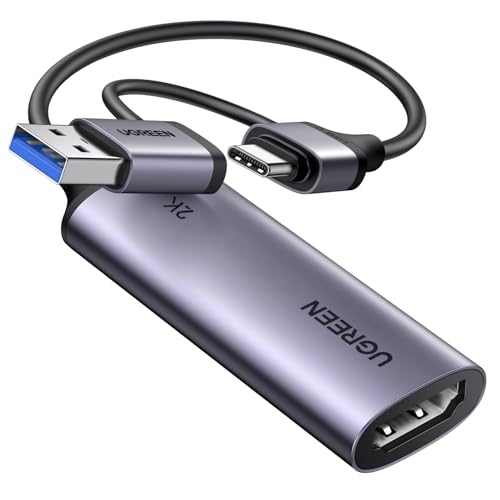
- 4K input with 2K30 or 1080p60 output
- USB-A and USB-C connectivity
- Supports consoles, phones, and tablets
Best For: Versatile home and mobile streaming
Best 4K-Input Value

- Accepts up to 4K HDMI input
- Captures up to 1080p at 30Hz
- Plug-and-play across Windows, macOS, and Linux
Best For: Basic streaming, camera capture, teaching, and video conferencing
Best for Low-Latency Gaming
UGREEN 4K Loop-Out Capture Card

- Captures 1080p at 60fps or 2K at 30fps
- Offers 4K HDMI input and loop-out
- Supports USB-A and USB-C recording devices
Best For: Gaming and streaming with real-time monitoring
Best Compact Budget Pick
PDAPTMAG 1080p HDMI Capture Card

- Captures HDMI video and audio up to 1080p
- Works with Windows, macOS, and Linux
- Small and portable for mobile setups
Best For: Beginner streaming, meetings, presentations, and casual console capture
Best Plug-and-Play Pick
1080p60 USB-C HDMI Capture Card

- 1080p60 capture with up to 4K30 input
- Plug-and-play USB-C and USB connectivity
- Compact design for portable streaming
Best For: Portable streaming, recording, and meetings
Best for Lag-Free Gaming
4K60 HDMI Capture Card with Loop-Out

- 4K60 HDMI input and loop-out
- 1080p60 capture through USB 3.0
- 3.5mm mic input for commentary
Best For: Console gaming and live streaming with pass-through
Best Compact Streaming Starter
1080p60 4K HDMI Capture Device
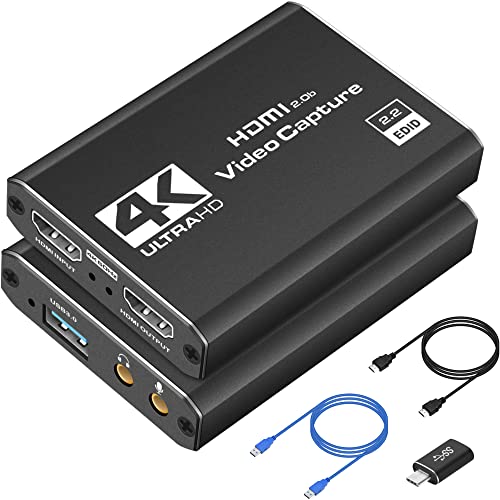
- 1080p60 recording with 4K preview
- Plug-and-play support for Windows and Mac
- Portable design for console and camera setups
Best For: Beginner and mobile content creators
Premium HDMI 2.1 Choice – Elgato 4K X
For demanding gaming and streaming setups, the Elgato 4K X is one of the most capable capture cards with HDMI. Its HDMI 2.1 input and output support high-refresh gameplay, while 4K144 capture and passthrough, VRR passthrough, HDR10, and USB 3.2 Gen 2 connectivity target users who want high image quality with minimal delay.
Best For: PS5, Xbox Series X, PC, and high-refresh gaming streams.
Pros:
- Supports 4K144 capture and passthrough with HDMI 2.1.
- Handles up to 1080p240 capture and includes VRR passthrough.
- Works with OBS, Streamlabs, Twitch Studio, Zoom, Teams, and other platforms.
- Offers ultra-low latency through USB 3.2 Gen 2.
Cons:
- Its advanced features require compatible HDMI 2.1 equipment and a capable computer.
- USB 3.2 Gen 1 can reduce capture resolution.
The 4K X is the strongest fit here for competitive gamers and creators who need high refresh rates, VRR support, and broad platform compatibility. Make sure your computer meets the listed CPU, GPU, and USB requirements before buying.
Professional 1080p60 Capture – Magewell USB Capture HDMI Gen 2
The Magewell USB Capture HDMI Gen 2 is a practical choice among capture cards with HDMI for reliable 1080p60 recording. Its FPGA-based processing handles scaling, cropping, de-interlacing, and color conversion on the device, helping reduce the processing burden on the connected computer.
Best For: Long-running HDMI capture on Windows, macOS, Linux, or Chrome OS.
Pros:
- Captures HDMI video up to 2048×1080 at 60fps.
- On-device processing can reduce CPU load.
- Plug-and-play operation supports Windows, macOS, Linux, and Chrome OS.
- Includes thermal protection, status LEDs, and a three-year limited warranty.
Cons:
- Maximum capture is 1080p60 rather than 4K.
- Requires a USB 3.1 interface for its stated performance.
This Magewell model prioritizes dependable operation and compatibility over cutting-edge resolution. It is a sensible option for production, presentations, and standard full-HD recording where 24/7 readiness matters.
Camera-to-USB Streaming Pick – Elgato Cam Link 4K
The Elgato Cam Link 4K is designed for creators looking for capture cards with HDMI that can turn a compatible camera into a webcam or live-video source. It accepts footage from DSLR and mirrorless cameras, camcorders, action cameras, and even an iPhone, with support for 1080p60 and 4K capture modes.
Best For: Camera-based streaming, video calls, and creator setups on PC, Mac, or iPad.
Pros:
- Connects DSLR, mirrorless, camcorder, action cam, or iPhone sources.
- Supports 1080p60 and 4K30/60 with compatible equipment.
- Provides ultra-low latency for synchronized video and audio.
- Works with OBS, Zoom, Discord, PC, Mac, and iPad.
Cons:
- 4K performance depends on a compatible camera and the latest Cam Link 4K model.
- Requires a camera with a suitable HDMI output for camera streaming.
Choose the Cam Link 4K if your main goal is upgrading camera footage for streaming rather than capturing console gameplay. Its compact design and broad camera compatibility make it an easy fit for creator and video-conferencing workflows.
Flexible Everyday Capture – UGREEN 2K HDMI Capture
The UGREEN 2K HDMI Video Capture Card is a flexible option for shoppers comparing capture cards with HDMI for everyday streaming and recording. It accepts up to 4K input, outputs up to 2K at 30fps or 1080p at 60fps, and includes both USB-A and USB-C connectivity for laptops, tablets, phones, and desktops.
Best For: Budget-conscious multi-device streaming with consoles, cameras, phones, or tablets.
Pros:
- Supports 4K input, 2K30 output, and 1080p60 capture.
- Includes USB-A and USB-C interfaces for broad device compatibility.
- Works with Windows, macOS, Linux, and iPadOS 17 or later.
- Compatible with OBS, XSplit, PotPlayer, QuickTime Player, and more.
Cons:
- It supports only one-way HDMI input to USB output.
- 4K input does not mean 4K output; maximum stated output is 2K30.
- Console sources may require HDCP to be disabled.
UGREEN offers a useful balance of resolution, connectivity, and platform support for casual creators and mobile workflows. Verify the source resolution, HDCP settings, and iPadOS version before setup.
Best 4K-Input Value – AXHDCAP HDMI Capture Card
The Audio Express AXHDCAP is one of the more accessible capture cards with HDMI for recording cameras, consoles, and other HDMI sources. It accepts up to 4K input but outputs captured video at up to 1080p through USB 2.0, making it a practical choice for basic streaming, teaching, conferencing, and recording setups.
Best For: Users who need a simple HDMI-to-USB capture device for 1080p recording, live streaming, video conferences, or camera capture.
Pros:
- Accepts HDMI input up to 4K at 30Hz while capturing up to 1080p at 30Hz
- Plug-and-play operation without drivers or external power
- Works with Windows, macOS, and Linux, plus software such as OBS, Twitch, YouTube, Zoom, and VLC
Cons:
- Uses USB 2.0 and does not support USB 3.0 recording speeds
- Captured output is limited to 1080p at 30Hz
- It cannot add HDMI output to a laptop or computer that lacks HDMI-out capability
The AXHDCAP offers broad compatibility and straightforward setup, but its USB 2.0 connection and 1080p/30Hz capture limit make it better suited to general-purpose streaming than high-frame-rate gaming.
Best for Low-Latency Gaming – UGREEN 4K Loop-Out Capture Card
The UGREEN model stands out among capture cards with HDMI for its HDMI loop-out and USB 3.0 connectivity. It accepts 4K input and passes through 4K at 30Hz, while recording up to 1080p at 60fps or 2K at 30fps for streaming and gameplay capture.
Best For: Gamers and streamers who want low-latency local preview, 1080p/60fps capture, and USB-A or USB-C connectivity.
Pros:
- Supports 1080p at 60fps and 2K at 30fps capture
- Provides 4K input and 4K/30Hz HDMI loop-out for real-time monitoring
- Includes USB 3.0 Type-C and Type-A connectivity with no driver or external power requirement
Cons:
- Does not support 4K recording
- PS4 and PS5 require HDCP to be turned off
- Not compatible with Fire TV Stick, and iPhones cannot be used as UVC data-acquisition devices
With loop-out, higher frame-rate 1080p capture, and a durable aluminum enclosure, UGREEN is the strongest fit here for responsive gaming setups. Its limitations are mainly around 4K recording and specific device compatibility.
Best Compact Budget Pick – PDAPTMAG 1080p HDMI Capture Card
The PDAPTMAG is a compact, budget-oriented option among capture cards with HDMI. Its USB 2.0 connection captures HDMI video and audio for consoles, cameras, laptops, and tablets, with compatibility across Windows, macOS, and Linux and support for common streaming software.
Best For: Beginners who want an inexpensive, portable capture card for 1080p recording, presentations, meetings, or casual console streaming.
Pros:
- Captures HDMI video and audio at up to 1080p
- Plug-and-play design works with Windows, macOS, and Linux
- Compact format is convenient for indoor or outdoor broadcasting
Cons:
- Uses USB 2.0 rather than USB 3.0
- Requires a computer with at least an i5-3400-class CPU, supported graphics, and 4GB RAM
- The supplied specifications contain mixed 1080p frame-rate references
This capture card is a sensible entry-level choice when portability and low cost matter more than advanced throughput. Buyers seeking consistent 60fps capture or more demanding workflows may prefer a USB 3.0 model.
Best Plug-and-Play Pick – 1080p60 USB-C HDMI Capture Card
For shoppers comparing capture cards with HDMI, this compact USB 3.0 model offers up to 1080p at 60fps capture, with USB-C and USB connectivity for flexible computer setups. It is designed for recording, streaming, meetings, and online teaching, but it requires capture software rather than directly casting to a TV or monitor.
Best For: Portable streaming, recording, and video conferencing with a laptop or compatible computer.
Pros:
- Captures up to 1080p at 60fps and accepts up to 4K at 30Hz input.
- Plug-and-play design requires no additional drivers or external power.
- Includes USB-C and USB connectivity and supports Windows, macOS, Linux, and Android.
- Compact aluminum-alloy housing is convenient for mobile setups.
Cons:
- It is intended for capture only and does not directly output video to a monitor or TV.
- USB 3.0 is recommended for the intended bandwidth and resolution.
- OBS may need to be restarted after audio setup, and adapter orientation can affect USB 3.0 recognition.
This is a practical choice when portability and simple setup matter more than direct display output. Its 1080p60 capture target suits everyday gaming streams and recordings, while the included adapter expands compatibility across USB ports.
Best for Lag-Free Gaming – 4K60 HDMI Capture Card with Loop-Out
Among capture cards with HDMI, this model stands out for 4K60 HDMI pass-through, 1080p60 capture, and a dedicated loop-out for live gameplay. USB 3.0 connects it to a computer, while the 3.5mm mic input supports external commentary for streams or interviews.
Best For: Gamers and streamers who want HDMI loop-out for play without relying solely on the preview window.
Pros:
- Supports 4K at 60Hz HDMI input and loop-out, with capture up to 1080p60.
- Offers 2K30 output through USB 3.0 with YUY2.
- Includes a 3.5mm microphone input for external commentary.
- Works with consoles, cameras, Windows, macOS, Linux, Android, OBS, Streamlabs, and other listed platforms.
Cons:
- It does not support 4K at 120Hz or 144Hz.
- The microphone input accepts a 3.5mm microphone headset and does not record party chats.
- OBS may need to be restarted after audio setup.
The loop-out connection makes this the most gaming-focused option in the group, especially for users who want a direct gameplay display while capturing footage. Its 1080p60 capture ceiling is well suited to mainstream streaming, while 4K60 pass-through preserves a higher-resolution source path.
Best Compact Streaming Starter – 1080p60 4K HDMI Capture Device
If you want capture cards with HDMI for a straightforward streaming setup, this USB 3.0 device supports 1080p60 recording and 4K HDMI real-time preview. It is marketed for consoles, PCs, and cameras, with compatibility for OBS Studio, Streamlabs, and XSplit.
Best For: New or mobile content creators who need simple 1080p60 capture from HDMI gaming and camera sources.
Pros:
- Records 1080p video at 60fps while supporting 4K HDMI real-time preview.
- Plug-and-play setup requires no drivers.
- Supports HDMI devices including PS5, PS4, Nintendo Switch, Xbox, PC, and cameras.
- Compact, lightweight design is convenient for changing setups or travel.
Cons:
- A USB 3.0 port is required, and compatibility is specified for Windows and Mac systems.
- The supplied notes identify 1080p60 as the recording resolution rather than 4K capture.
- The listed warranty description is one year.
This model keeps the feature set focused on accessible streaming: connect an HDMI source, use a supported USB 3.0 computer, and capture through familiar software. It is a sensible fit for creators who value portability and 1080p60 output over higher-resolution recording.
How We Picked These Capture Cards with Hdmi
We focused on HDMI capture devices suited to common streaming, gaming, recording, and camera workflows. Selection criteria included supported input and output resolutions, maximum frame rates, connection type, passthrough functionality, compatibility with popular software, and practical ease of use.
Because product specifications vary widely, advertised 4K input does not always mean 4K recording. Some devices accept a 4K signal but output or record at 1080p, while others provide higher-resolution passthrough for gaming monitors. Confirm the full signal path before buying.
Quick Comparison
| Best For | Features to Look For | Recommended Type |
|---|---|---|
| Competitive gaming | HDMI 2.1, high refresh-rate passthrough, low latency | Premium 4K capture card |
| 1080p streaming | 1080p60 capture, USB 3.0, reliable software support | USB 3.0 HDMI capture card |
| Camera streaming | Clean HDMI output, continuous power, stable capture | Camera-focused capture card |
| Basic recording | Plug-and-play setup and broad compatibility | Budget USB capture device |
| Console gaming with a display | HDMI loop out or passthrough | Capture card with passthrough |
Key Buying Factors for Capture Cards with Hdmi
Input, Recording, and Passthrough Resolution
Check three separate specifications: the maximum HDMI input, the resolution the device can record or stream, and the passthrough resolution shown on your display. A card may accept 4K input while recording at 1080p60. For modern consoles and gaming PCs, also verify support for HDR, high refresh rates, and the exact HDMI version you need.
Frame Rate and Latency
1080p60 is a useful baseline for smooth streaming and gameplay footage. Higher-end models are better suited to 4K workflows or high-refresh-rate monitors. Low latency is especially important when playing through the capture setup, although passthrough generally provides a more responsive gaming experience than previewing the signal in software.
USB Connection and Computer Compatibility
USB 3.0 or USB-C is preferable for higher-bandwidth video. USB 2.0 models can work for basic 1080p capture but may have more limited performance. Check the included cable, available ports, operating-system support, and compatibility with OBS Studio or your preferred recording application.
Audio and Camera Requirements
For cameras, confirm that the source provides clean HDMI without on-screen menus. For gaming, check how HDMI audio is handled and whether you need a separate microphone or headset connection. Some inexpensive cards advertise broad compatibility but offer fewer controls for audio monitoring and synchronization.
Who Should Buy Which Capture Cards with Hdmi?
Choose a premium HDMI 2.1 model if you use a high-end gaming PC, want high-refresh-rate passthrough, or need a more advanced 4K workflow. A dependable USB 3.0 1080p60 card is the best fit for most Twitch, YouTube, and console streamers. Camera users should prioritize clean HDMI support, stable operation, and compatibility with their camera rather than gaming-oriented specifications.
Budget capture cards make sense for occasional recording, video calls, and simple console setups. Before ordering, match the card’s input and output limits to your source, display, computer, and streaming resolution so you do not pay for features your setup cannot use—or discover that an advertised 4K input does not provide 4K recording.