Turning a DSLR into a webcam or streaming camera requires more than an HDMI cable. A capture card converts the camera’s HDMI output into a USB video source that software such as OBS, Zoom, and Teams can recognize.
We selected 10 capture cards for DSLR cameras covering simple plug-and-play adapters, 4K-capable models, low-latency options, and devices with pass-through for more advanced streaming setups.
Best 10 Capture Card for Dslr Camera Picks for 2026
Premium DSLR Webcam Pick

- 1080p60 and 4K capture support
- Ultra-low-latency HDMI-to-USB 3.0 connection
- Works with cameras, OBS, Zoom, PC, Mac, and iPad
Best For: Creators seeking a streamlined camera-to-computer setup
Versatile Loop-Out Choice

- 4K60 HDMI input with loop-out
- 1080p60 USB 3.0 capture
- Adds 3.5mm mic input and wide software support
Best For: Camera, gaming, and commentary setups needing pass-through
Portable 4K30 Option

- Captures 4K30, 2K60, and 1080p120
- USB-C 3.2 with included Type-A adapter
- Compact, driver-free design for field use
Best For: Portable streaming, podcasting, and field production
Budget Plug-and-Play Pick

- 1080p60 or 2K30 output from 4K30 input
- No drivers or external power required
- Compact design with broad device compatibility
Best For: Basic DSLR streaming, meetings, and portable capture
Best Budget Pick

- Captures up to 4K30 and 1080p120
- Plug-and-play USB 3.0 connectivity
- Works with DSLR cameras, consoles, OBS, and Zoom
Best For: Budget-conscious DSLR streamers and creators
Best for Pass-Through
Redragon VC321 4K Capture Card
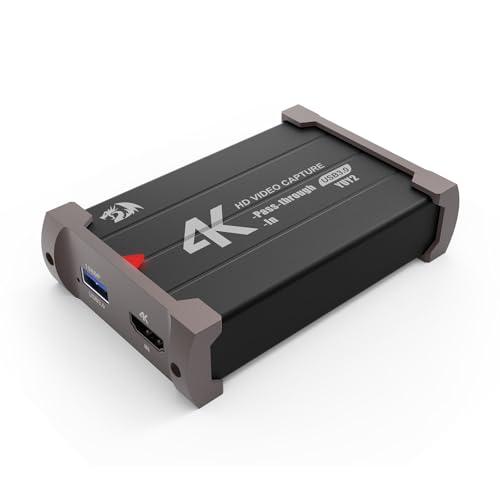
- 1080p60 video capture
- Zero-latency 4K HDMI pass-through
- Captures video and audio simultaneously
Best For: DSLR creators and gamers needing responsive monitoring
Best for Detailed Demonstrations
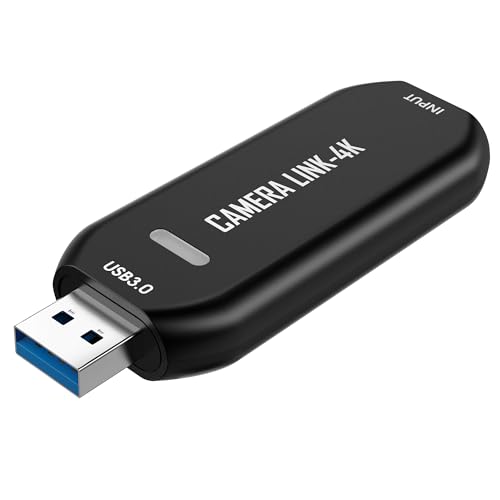
- Captures 1080p60 or up to 2K50
- Works with DSLRs and microscopes
- Driver-free setup for OBS and Zoom
Best For: Microscope, repair, inspection, and detailed DSLR recording
Best with Extra Features
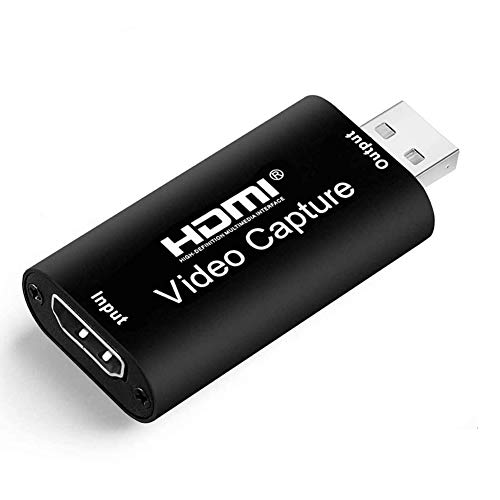
- 4K input with 1080p/30fps output
- Plug-and-play USB 2.0 setup
- Works with Windows, Mac, and Linux
Best For: Affordable DSLR streaming and recording
Best Premium Option
AVerMedia CamStream 4K for DSLR

- 4K60 capture with RGB24 color
- Ultra-low latency and synchronized audio
- Includes USB-C cable and shoe mount
Best For: Professional streaming and video conferencing
Best for Low-Latency Setup
1080p USB 3.0 HDMI Capture Card

- 1080p capture over USB 3.0
- HDMI loop-out for pass-through
- 3.5mm TRS microphone input
Best For: Low-latency streaming with commentary
Premium DSLR Webcam Pick – Elgato Cam Link 4K
The Elgato Cam Link 4K is a polished capture card for DSLR camera setups, connecting a compatible HDMI camera to a PC, Mac, or iPad over USB 3.0. It supports 1080p60 and, with compatible equipment, 4K capture for streaming, recording, and monitoring.
Best For: Creators who want a compact, low-latency camera-to-computer setup for streaming, video calls, or field monitoring.
Pros:
- Supports 1080p60 and 4K capture options.
- Ultra-low latency helps keep video and audio synchronized.
- Works with DSLR, mirrorless, camcorder, action camera, and iPhone sources.
- Compatible with OBS, Zoom, Discord, PC, Mac, and iPad.
Cons:
- 4K performance requires a compatible camera and the latest Cam Link 4K model.
- Requires an HDMI output from the camera and a USB 3.0 connection.
Its compact design, broad software support, and dependable low-latency performance make it a strong choice when simplicity matters more than extra loop-out or microphone connections.
Versatile Loop-Out Choice – VIXLW 4K HDMI Capture Card
This VIXLW model is a flexible capture card for DSLR camera use, gaming, and meetings. It accepts up to 4K60 HDMI input, captures up to 1080p60 over USB 3.0, and adds HDMI loop-out plus a 3.5mm microphone input.
Best For: Users who need one capture device for a DSLR, console, live preview, and external microphone commentary.
Pros:
- Supports 4K60 HDMI input and loop-out.
- Captures up to 1080p60 and outputs up to 2K30 via USB 3.0.
- Includes a 3.5mm mic input for commentary or interviews.
- Works with Windows, macOS, Linux, Android, OBS, Streamlabs, Zoom, and VLC.
Cons:
- Does not support 4K120 or 4K144 input.
- The microphone input accepts a 3.5mm microphone headset and does not record party chats.
- The listed warranty is 60 days.
With loop-out, broad compatibility, and a useful mic input, this is a practical feature-rich option, though its capture resolution and short warranty should be weighed carefully.
Portable 4K30 Option – j5create DSLR Cam Link
The j5create DSLR Cam Link is a compact capture card for DSLR camera streaming, recording, broadcasting, and video conferencing. Its USB-C 3.2 Gen 1 connection captures 4K at 30 fps, 2K at 60 fps, or 1080p at 120 fps, and includes a USB Type-A adapter for added compatibility.
Best For: Mobile creators, podcasters, and streamers who want high-resolution capture in a small, driver-free package.
Pros:
- Supports 4K30, 2K60, and 1080p120 capture modes.
- Uses a high-performance USB-C 3.2 connection.
- Compact and easy to transport for field production.
- Works with OBS, XSplit, CameraFi, QuickTime, and major gaming consoles.
Cons:
- 4K capture is limited to 30 fps.
- Its USB-C connection may require the included adapter for USB Type-A systems.
- The notes do not specify a loop-out or microphone input.
This model stands out for portability and flexible frame-rate options. It is especially appealing for creators who value 4K capture and USB-C convenience without installing drivers.
Budget Plug-and-Play Pick – USB 3.0 HDMI Capture Card
This compact HDMI-to-USB capture card is a straightforward capture card for DSLR camera workflows, online meetings, live streaming, and recording. It accepts up to 4K30 input and delivers up to 1080p60 or 2K30 output through USB 3.0, with USB-C and USB connectivity.
Best For: Buyers seeking an inexpensive, portable capture solution for DSLR video, basic streaming, and real-time previews.
Pros:
- Supports up to 1080p60 or 2K30 output.
- Plug-and-play operation requires no extra driver or external power.
- Aluminum-alloy housing helps with heat dissipation.
- Compatible with Windows, Mac, Linux, Android, OBS, VLC, Zoom, consoles, and cameras.
Cons:
- It is for capture use and is not intended to cast directly to a monitor or TV.
- 4K input is limited to 30 Hz, while output tops out at 2K30 or 1080p60.
- USB 3.0 is recommended; adapters may be recognized as USB 2.0 and reduce performance.
Its small size and broad compatibility make it convenient for everyday capture, but users should set expectations around output limits, software requirements, and USB bandwidth.
Best Budget Pick – Mwin Cam Link 4K
The Mwin Cam Link 4K is a practical capture card for DSLR camera setups that need flexible resolution support, simple USB 3.0 connectivity, and compatibility with common streaming software. It captures up to 4K30 and 1080p120, while its compact, driver-free design makes it convenient for streaming, recording, conferencing, and travel.
Best For: Budget-conscious streamers and creators using a DSLR, camcorder, action camera, or game console with Windows or Mac.
Pros:
- Supports up to 4K30 capture, 1440p60, and 1080p120.
- USB 3.0 connection is designed for high-speed, low-latency transfer.
- Plug-and-play operation works with OBS, VLC, Amcap, Zoom, and other software.
- Compact 0.07 kg design is easy to carry.
Cons:
- HDMI cable is not included.
- Requires a computer with a USB 3.0 port.
Choose the Mwin if you want broad device compatibility and high-resolution capture without paying for a more advanced setup. Its stated two-year warranty is also useful for buyers prioritizing longer coverage.
Best for Pass-Through – Redragon VC321 4K Capture Card
The Redragon VC321 is a capture card for DSLR camera and gaming setups where smooth monitoring matters. It accepts up to 4K30 input, captures at 1080p60, and provides zero-latency HDMI pass-through for real-time previews or gameplay while recording through a Windows or Mac computer.
Best For: Creators and gamers who want 1080p60 capture with zero-latency HDMI pass-through and simultaneous audio-video recording.
Pros:
- Captures 1080p video at up to 60 frames per second.
- Supports 4K30 input and zero-latency HDMI pass-through.
- Plug-and-play design requires no additional drivers or power source.
- Compatible with DSLRs, cameras, PS5, Xbox, Switch, Windows 7+, and macOS 10.15+.
Cons:
- Capture resolution is listed as 1080p, rather than 4K capture.
- Its one-year warranty is shorter than some alternatives.
The VC321 is a strong fit when responsive pass-through is more important than recording in 4K. It also offers a straightforward choice for users who want video and audio captured together without a driver-heavy installation.
Best for Detailed Demonstrations – Cam Link 4K USB Capture Card
This Cam Link 4K is a versatile capture card for DSLR camera workflows, microscopes, and other HDMI devices. It supports smooth 1080p60 or up to 2K50 capture, and its driver-free HDMI-to-USB 3.0 design works with OBS, Zoom, and similar software for streaming, teaching, repair demonstrations, and precision work.
Best For: Users recording microscope views, electronics repair, inspections, DIY projects, or DSLR-based streams where fine detail is important.
Pros:
- Supports 1080p60 and up to 2K50 resolution.
- Compatible with DSLRs, microscopes, action cameras, camcorders, and other HDMI devices.
- Plug-and-play operation requires no drivers.
- Useful for live streaming, teaching, inspection, and precision recording.
Cons:
- Does not list 4K capture support in the supplied specifications.
- Only one channel is specified.
Consider this model when your priority is recording detailed close-up work rather than 4K output. Its microscope and repair-oriented positioning gives it a useful edge for instructional, inspection, and demonstration setups.
Best with Extra Features – 1080p DSLR HDMI Capture Card
This affordable capture card for DSLR cameras accepts up to 4K HDMI input and outputs Full HD 1080p at 30fps. Its plug-and-play USB 2.0 design works with Windows, Mac, and Linux, making it a practical option for basic streaming, recording, teaching, and video calls.
Best For: Budget-conscious users who need straightforward DSLR streaming at 1080p.
Pros:
- Supports 4K input with 1080p output at 30fps.
- Works with DSLR cameras, camcorders, action cameras, and gaming consoles.
- Requires no external driver or power supply.
- Includes a lifetime replacement or refund guarantee for quality issues.
Cons:
- USB 2.0 and 30fps output are less suited to high-frame-rate capture.
- Requires a computer meeting the listed processor requirements.
This is a sensible entry-level choice when reliable 1080p output matters more than advanced features or 4K recording.
Best Premium Option – AVerMedia CamStream 4K for DSLR
For creators seeking a higher-end capture card for DSLR cameras, the AVerMedia CamStream 4K supports 4K60 capture with RGB24 color and ultra-low latency. It connects over USB-C without extra power and is designed for OBS, Twitch, Zoom, video conferencing, and other streaming workflows.
Best For: Professional streamers and creators who want 4K60 capture and broad device compatibility.
Pros:
- Captures 4K video at 60fps with RGB24 color.
- Provides ultra-low-latency, synchronized audio and video.
- Works with Windows, Mac, iPad, and compatible Android devices.
- Includes a 1/4-inch cold/hot shoe mount adapter and USB-C cable.
Cons:
- Requires relatively recent operating systems and a USB-C port.
- Its advanced capabilities may be unnecessary for basic 1080p streaming.
With 4K60 support, low-latency performance, and a three-year manufacturer warranty, this is the strongest fit for demanding live-production setups.
Best for Low-Latency Setup – 1080p USB 3.0 HDMI Capture Card
This USB 3.0 capture card for DSLR cameras is built for Full HD 1080p capture and low-latency streaming. It offers plug-and-play operation, HDMI loop-out for pass-through, and a microphone input for commentary, while supporting Windows, Mac OS, and Linux workflows.
Best For: Gamers and streamers who need HDMI pass-through and external microphone support.
Pros:
- Supports 1080p capture with high-speed USB 3.0 connectivity.
- HDMI loop-out enables pass-through with no stated gameplay delay.
- Plug-and-play operation requires no driver or external power supply.
- Includes a 3.5mm TRS microphone input for commentary.
Cons:
- Capture resolution is limited to 1080p.
- The microphone input accepts 3.5mm TRS standard headsets only.
This model is a practical all-rounder for DSLR streaming when smooth USB 3.0 transfer, pass-through, and commentary are more important than 4K capture.
How We Picked the Best Capture Card for Dslr Camera
We focused on the features that affect real-world camera capture: supported input and output resolutions, frame rates, USB connectivity, latency, pass-through, compatibility, and setup simplicity. We also considered whether each device suits common DSLR workflows such as livestreaming, video conferencing, recording tutorials, and monitoring a camera feed in OBS.
Specifications can vary by computer, camera, cable, and software. A product advertised as 4K input may capture at a lower resolution, so check the distinction between HDMI pass-through, input support, and actual USB recording output before buying.
Quick Comparison
- Best overall: Elgato Cam Link 4K is a strong choice for dependable DSLR-to-computer streaming.
- Best for 4K60 workflows: AVerMedia’s 4K60 model is suited to demanding capture and low-latency setups.
- Best for budget buyers: Basic USB 3.0 HDMI capture cards offer practical 1080p streaming at a lower cost.
- Best for pass-through: The Redragon VC321 supports monitoring while sending video to a computer.
- Best for specialist setups: Cam Link-style adapters can connect DSLRs, microscopes, action cameras, and other HDMI sources.
Key Buying Factors for a Capture Card for Dslr Camera
Resolution and Frame Rate
For standard livestreams and video calls, 1080p at 30 or 60 frames per second is usually sufficient. Choose a 4K-capable model if you record high-resolution footage, want room to crop, or need compatibility with a 4K HDMI source. Confirm whether 4K refers to capture, pass-through, or only the signal accepted at the input.
USB Connection and Compatibility
USB 3.0 is preferable for higher-bandwidth video, while USB-C may offer convenience on newer laptops. Verify the included connector and whether an adapter is required. Most UVC-compatible cards work without proprietary drivers, but your operating system and streaming software still need to recognize the device.
Latency, Pass-Through, and Audio
Low latency matters for live monitoring and interactive streaming. HDMI pass-through lets you send the camera signal to a display while capturing it on your computer. Also check how the card handles embedded HDMI audio and whether your DSLR can output clean video without menus, focus boxes, or battery warnings.
Who Should Buy Which Capture Card for Dslr Camera?
Choose a simple 1080p USB 3.0 model for Zoom calls, occasional streaming, or basic recording. Choose a 4K model if you want more resolution flexibility or plan to use multiple camera types. Choose a low-latency card with pass-through for gaming-style layouts, live production, or an external monitor. Choose a branded option when consistent drivers, support, and predictable software compatibility matter more than the lowest price.
Before ordering, confirm that your DSLR has a clean HDMI output, continuous power or a dummy battery option, and a compatible HDMI port. Those camera-side details can matter just as much as the capture card itself.