Learning conga is more approachable when you have the right combination of clear instruction, rhythm practice, and hands-on guidance. This roundup focuses on affordable resources and accessories that can help beginners build timing, technique, and confidence.
From structured method books and step-by-step lessons to supplementary Latin percussion tools, these congas under 100 picks offer practical ways to start practicing without a large upfront investment.
Best 10 Congas Under 100 Picks for 2026
Technique Foundation
Progressive Bongo & Conga Technique

- Covers rhythms, variations, fills, and solos
- Includes multiple Latin styles plus modern jazz
- Compact 24-page practice reference
Best For: Focused technique practice and style exploration
Audio-Guided Learning

- Includes online exercise audio
- Offers play-along practice tracks
- Covers Latin, pop, funk, R&B, and jazz
Best For: Students who learn well through audio guidance
Step-by-Step Method
Tomas Cruz Conga Method Vol. 1

- Starts from absolute beginner level
- Includes online step-by-step video
- Uses accessible notation and Latin patterns
Best For: Systematic beginner-to-foundation instruction
Party Rhythm Set

- Includes two guiros and two sticks
- Wooden, compact, and simple to play
- Useful for home, school, and parties
Best For: Casual rhythm play and group activities
Beginner Songbook

- Step-by-step lessons for beginners
- 100+ songs for practice
- Covers technique, grooves, and improvisation
Best For: New players seeking guided conga practice
Latin Rhythm Reference
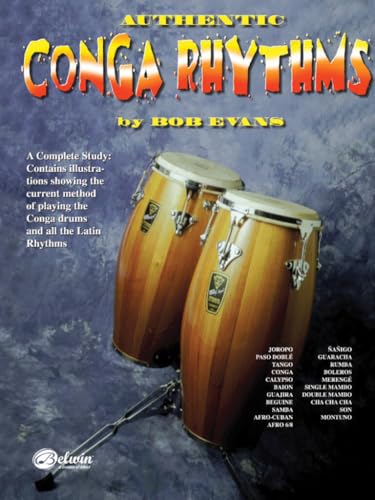
- Illustrated conga-playing method
- Complete study of Latin rhythms
- Revised Alfred Music edition
Best For: Players studying Latin conga rhythm patterns
First-Step Method

- Covers posture, tuning, and hand strokes
- Includes exercises and Latin rhythms
- Online audio access included
Best For: First-time students building core technique
Beginner Technique Guide

- Step-by-step coverage of posture, hand position, tones, and strokes
- Introduces clave, tumbao, timing, and practical Latin rhythms
- Beginner-focused practice structure for building confidence
Best For: New conga players learning foundational technique
Classroom Ensemble Collection

- Contains 12 conga-focused percussion ensemble arrangements
- Written for upper elementary and middle school classes
- Adds teaching tips, photos, and technique instructions
Best For: Teachers leading school percussion ensembles
Structured Practice Method

- Progresses from first tones to grooves, fills, improvisation, and performance
- Covers clave, marcha, tumbao, Afro-Cuban patterns, and tonal accuracy
- Includes metronome work and a practical 30-day practice plan
Best For: Beginners wanting a comprehensive, guided practice path
Technique Foundation – Progressive Bongo & Conga Technique
If you are shopping for congas under 100 and want structured practice material rather than a physical instrument, this 24-page Alfred Music guide covers core rhythms, variations, fill-ins, and short solos across several Latin styles and modern jazz.
Best For: Beginners and developing players who want a compact introduction to varied bongo and conga techniques.
Pros:
- Covers bolero, cha-cha, merengue, mambo, guaracha, rumba, and modern jazz.
- Includes basic rhythms, variations, fill-ins, and short solos.
- Compact 24-page format for focused reference.
Cons:
- Shorter than the other method books in this roundup.
- Does not list included audio or video access.
This is a concise skills reference for learners who prefer a focused overview of patterns and musical applications. It is best paired with an instrument and regular hands-on practice.
Audio-Guided Learning – Play Congas Now
Among congas under 100, this 88-page method stands out for its user-friendly approach and included online audio. It teaches foundational styles, patterns, and techniques while providing performances and play-along tracks for practice.
Best For: Students who want guided instruction, audio examples, and broad coverage of Latin and contemporary styles.
Pros:
- Includes online audio with performances of the exercises.
- Provides play-along tracks for practice.
- Covers Cuban, Puerto Rican, Dominican, pop/rock, funk, R&B, and school jazz band use.
- Written in a Spanish and English language edition.
Cons:
- The supplied details identify Spanish as the book language.
- Online audio access may require an internet-connected device.
Choose this book if hearing the exercises and playing along will help you stay on tempo. Its wide style range also makes it useful beyond strictly traditional Latin repertoire.
Step-by-Step Method – Tomas Cruz Conga Method Vol. 1
For shoppers comparing congas under 100 with instructional resources, this 72-page volume starts at the absolute beginning and builds technique, rudiments, fills, and rhythm patterns through a step-by-step video method and accessible notation.
Best For: Complete beginners and advancing players seeking a systematic Cuban-influenced foundation with online video support.
Pros:
- Begins with fundamentals for players who have never played congas.
- Uses video demonstrations that build patterns stroke by stroke.
- Includes simple notation for readers who do not read music.
- Covers salsa, cha-cha, bolero, rudiments, solos, and fills.
Cons:
- Online video access is required for the full video-based approach.
- Volume I focuses on foundational material rather than an entire multi-volume course.
This is a strong option when you want a deliberately sequenced method instead of a pattern collection. The visual instruction and simplified notation can make the early stages more approachable.
Party Rhythm Set – Wooden Fish Guiro Duo
If your congas under 100 search includes inexpensive rhythm accessories, this set supplies two wooden fish-shaped guiros and two rhythm sticks. Its simple scrape-and-tap design suits casual music-making at home, school, parties, and other gatherings.
Best For: Beginners, children, classrooms, and party hosts looking for compact handheld percussion rather than conga drums.
Pros:
- Includes two guiros and two rhythm sticks.
- Wood construction with smooth edges and a sturdy design.
- Simple operation for developing rhythm awareness.
- Suitable for home, school, stores, and parties.
Cons:
- This is a guiro set, not a conga or bongo instrument.
- The small size may not suit players seeking full-size percussion.
- No warranty is listed in the supplied details.
This set makes sense as a low-commitment way to add Latin-style scraping and tapping textures. Verify the listed dimensions before buying, especially if the instruments are intended for larger hands.
Beginner Songbook – How to Play the Conga
HOW TO PLAY THE CONGA SONGBOOK: A STEP BY STEP GUIDE FOR BEGINNERS +1OO FREE CONGA SONGS
Check Price On AmazonIf you’re comparing congas under 100, this beginner-focused songbook is a practical pick for learning through structured lessons and familiar repertoire. It covers core hand techniques, rhythmic patterns, improvisation, ensemble skills, and practice strategies, plus more than 100 songs.
Best For: Beginners who want step-by-step instruction and a large collection of songs to practice.
Pros:
- Introduces open tones, slaps, and muted strokes.
- Covers Afro-Cuban, Latin, Afrobeat, and jazz grooves.
- Includes more than 100 songs and guidance on improvisation.
Cons:
- At 59 pages, it is a relatively concise guide.
- The listed publication date is April 2026.
This is a focused learning resource rather than a physical conga, making it useful for shoppers who already have access to a drum and want a structured way to build confidence.
Latin Rhythm Reference – Authentic Conga Rhythms
For shoppers researching congas under 100 who want a focused rhythm reference, Authentic Conga Rhythms presents a complete study of Latin rhythms with illustrations showing the current method of playing conga drums. Its revised edition dates to 1996 and runs 32 pages.
Best For: Players looking for a compact illustrated study of Latin conga rhythms.
Pros:
- Focuses specifically on Latin rhythms.
- Includes illustrations of conga-playing methods.
- Published by Alfred Music in a revised edition.
Cons:
- The guide is only 32 pages long.
- The supplied details do not mention audio access or beginner exercises.
This concise reference may suit learners who want to concentrate on Latin rhythm material, though those seeking posture, tuning, or broader introductory instruction may prefer a more comprehensive method.
First-Step Method – First Lessons Conga
Among congas under 100 learning resources, First Lessons Conga stands out as an introductory method with accompanying online audio. It addresses notation, posture, positioning, tuning, and hand strokes, then adds exercises, Latin rhythms, and instrument history.
Best For: First-time conga students who want foundational instruction supported by online audio.
Pros:
- Covers posture, positioning, tuning, and hand strokes.
- Includes music notation lessons and practical exercises.
- Provides access to online audio and introduces Latin rhythms.
Cons:
- The listed print length is 35 pages.
- The supplied details do not specify the audio’s format or duration.
Written by Mel Bay author Trevor Salloum, this compact method offers a well-rounded starting point for learning the instrument’s basic setup and playing approach.
Beginner Technique Guide – How to Play Congas
If you are comparing congas under 100 and want instruction rather than another instrument, How to Play Congas offers a structured starting point. This beginner-friendly guide covers posture, hand position, basic sounds, timing, essential rhythms, tumbao, clave, and practice methods in a gradual format.
Best For: New players who want a practical, step-by-step foundation for learning conga techniques and Latin grooves.
Pros:
- Explains posture, hand positioning, strokes, and basic tones clearly.
- Introduces timing, rhythm patterns, clave, tumbao, and Latin grooves progressively.
- Includes practice guidance aimed at building coordination, control, speed, and consistency.
Cons:
- At 92 pages, it is focused on foundational instruction rather than an extensive reference.
- The supplied description is aimed primarily at beginners, so advanced players may find the scope limited.
For shoppers seeking congas under 100 who also need a clear learning path, this book is a useful companion. Its emphasis on gradual progress makes it suitable for casual playing, accompaniment, or building confidence before tackling more complex rhythms.
Classroom Ensemble Collection – Conga Town
For buyers researching congas under 100 for a school or group setting, Conga Town is a compact teaching and arrangement book rather than a general solo method. It provides 12 percussion ensemble arrangements with a conga focus, along with teaching tips, photographs, and percussion technique instructions.
Best For: Upper elementary and middle school teachers organizing classroom percussion ensembles with a conga-centered repertoire.
Pros:
- Includes 12 percussion ensemble arrangements.
- Designed specifically for upper elementary and middle school use.
- Combines teaching tips, photographs, and technique instructions.
Cons:
- Its classroom ensemble focus may not suit someone seeking individual beginner lessons.
- The 32-page format offers a relatively compact collection.
This is a specialized choice for educators who need ready-to-use group material. If your congas under 100 purchase supports a school percussion program, its ensemble arrangements and teaching resources make it more relevant than a standard technique-only book.
Structured Practice Method – How to Play Conga Drums
If you are shopping for congas under 100 and want a more comprehensive beginner method to use alongside your instrument, How To Play Conga Drums For Beginners lays out a progression from first tones to grooves and performance skills. The guide covers hand technique, tonal accuracy, pulse, clave, marcha, tumbao, fills, improvisation, and a 30-day practice plan.
Best For: Beginners who want structured practice, progressive rhythm lessons, and guidance on developing control and musical feel.
Pros:
- Connects posture, hand technique, sound control, timing, rhythm, and performance.
- Covers open tones, touches, slaps, clave, marcha, tumbao, Afro-Cuban patterns, and fills.
- Includes metronome guidance, backing-track practice, and a complete 30-day progression.
- Addresses tuning, care, instrument selection, timing drift, fatigue, and performance nerves.
Cons:
- The broad curriculum may feel more involved than a simple introductory pattern book.
- The supplied notes do not specify the book’s page count or publication details.
Among these instructional options, this guide offers the widest stated progression from basic technique to musical application. It is a strong fit for shoppers pairing congas under 100 with a deliberate practice routine and wanting more than isolated rhythm examples.
How We Picked the Best Congas Under 100
We focused on affordable products that support beginner and early-intermediate conga practice. The selection includes method books, structured lesson guides, rhythm references, song collections, ensemble materials, and a supplementary guiro instrument. We considered instructional clarity, coverage of core techniques, usefulness for independent practice, and suitability for different learning styles.
Because several selections are educational rather than standalone drums, check the product format carefully. Some provide printed instruction, while others may include online audio, illustrations, or song-based exercises. A compatible conga or practice setup may still be required.
Quick Comparison
- Best for a structured start: First Lessons Conga and other beginner-focused step-by-step methods.
- Best for technique building: Tomas Cruz Conga Method Volume 1 and hand-technique guides.
- Best for rhythm variety: Authentic Conga Rhythms and song collections.
- Best for bilingual learners: Play Congas Now, which combines Spanish and English instruction with audio support.
- Best for group instruction: Conga Town, designed for school percussion ensembles.
- Best supplementary accessory: The two-piece fish guiro set for adding Latin percussion textures.
Key Buying Factors for Congas Under 100
Instruction Level
Beginners should look for plain-language explanations, progressive exercises, and guidance on posture, hand placement, open tones, bass tones, slaps, and muted sounds. More advanced method books may be valuable, but they can feel demanding without basic familiarity.
Technique and Rhythm Coverage
A strong resource should go beyond isolated patterns. Look for instruction covering tumbao, clave, timing, coordination, and complete grooves. Audio examples or play-along material can make it easier to hear whether your technique and phrasing are developing correctly.
Format and Practice Needs
Consider whether you prefer a traditional book, a digital supplement, bilingual content, or song-based learning. If you are buying an instrument accessory, verify dimensions, materials, and whether it is intended for practice, performance, or classroom use.
Learning Context
Solo learners may benefit from a progressive method with repeatable exercises. Teachers and school programs may prefer ensemble arrangements, while players who lose interest with drills may stay motivated with recognizable songs and varied Latin rhythms.
Who Should Buy Which Congas Under 100?
Choose a beginner method if you are starting from scratch and want a dependable sequence of lessons. Pick a technique-focused guide if you already know basic tones but need better hand control and tonal accuracy. Rhythm collections and songbooks suit players who learn best through repertoire and want to apply patterns musically.
For bilingual households or students, the Spanish-English option can make instruction more accessible. School directors and group teachers should consider the ensemble-focused title, while players expanding a percussion setup can add the guiro for complementary Latin textures. Before purchasing, confirm the edition, included audio access, language, and required equipment so the resource matches your practice goals.