Finding the right violin for smaller hands starts with choosing a manageable size, not simply the least expensive outfit. A properly fitted instrument can make fingering, bow control, and daily practice more comfortable for beginners.
This roundup compares 10 student violins and complete starter kits, including compact 1/4 and 1/2-size models alongside 3/4-size options for players who are ready to move up.
Best 10 Violins for Small Hands Picks for 2026
Best Complete Starter Set

- Complete beginner accessory bundle
- Spruce and maple construction
- Includes tuner and lesson materials
Best For: Beginners needing a ready-to-start 1/2-size outfit
Best Playability-Focused Pick
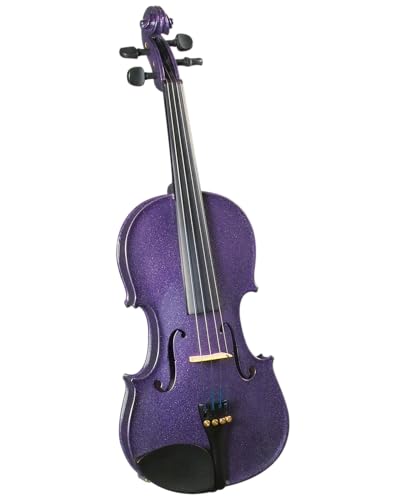
- Student-focused setup features
- Prelude strings and fine tuners
- Eye-catching purple finish
Best For: Young learners prioritizing comfort and easy tuning
Best Smallest Size

- Compact 1/4-size format
- Includes case and shoulder rest
- Comes with tuner, rosin, and extras
Best For: Right-handed beginners needing a smaller starter violin
Best for Developing Students

- 3/4 size for advancing players
- Select spruce and maple tonewoods
- Prelude strings and four fine tuners
Best For: Right-handed students progressing toward full size
Best Guided Starter

- 1/2-size format for smaller players
- Finger guide supports early positioning
- Includes case and essential accessories
Best For: Young beginners who want visual finger-position guidance
Best Compact Beginner Kit

- Compact 1/4-size format for young players
- Solid spruce top with maple back
- Complete kit includes case and shoulder rest
Best For: Young beginners starting lessons with a smaller instrument
Full-Size Craftsmanship
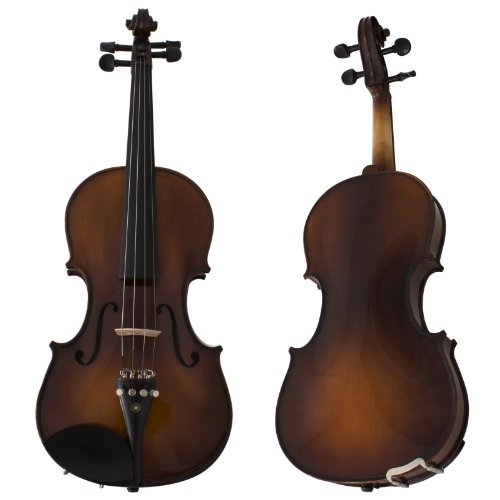
- Solid spruce top with aged, hand-carved maple back and sides
- Ebony fittings and four detachable fine tuners
- Includes case, two bows, rosin, extra strings, and bridge
Best For: Full-size players wanting a complete practice and performance outfit
Lesson-Ready Package

- Spruce, maple, and ebony construction with warm tones
- Includes two bows, tuner, shoulder rest, rosin, and lesson book
- Hard case has backpack and shoulder straps
Best For: Full-size beginners preparing for lessons, band, or orchestra
Best Complete Starter Set – Mendini 1/2 Violin Kit
For shoppers comparing violins for small hands, this 1/2-size Mendini set is designed as an all-in-one beginner package. It includes the instrument, bow, rosin, tuner, extra strings, shoulder rest, case, and introductory learning materials.
Best For: Beginners who want a 1/2-size violin and a broad accessory bundle for getting started.
Pros:
- Includes a clip-on tuner, extra strings, rosin, shoulder rest, two bridges, and a lightweight hard case.
- Hand-carved spruce top with maple back and sides gives the instrument a traditional wood construction.
- Includes a first-lesson book and access to recorded practice exercises and pieces.
- Four fine tuners can make basic tuning adjustments more manageable for new players.
Cons:
- The bridge is not set up for shipping and requires careful setup before playing.
- Tuning pegs must be handled carefully and pushed in while adjusting.
This is a particularly practical choice when convenience matters as much as the instrument itself. Its 1/2 size suits many young learners, while the included learning and maintenance accessories reduce the need for immediate add-on purchases.
Best Playability-Focused Pick – Cremona SV-75 1/2 Violin
Among violins for small hands, the Cremona SV-75 stands out for its student-focused setup features. This 1/2-size outfit combines a hand-carved spruce-and-maple body with Prelude strings, fitted pegs, and four fine tuners.
Best For: Young learners who value comfortable playability, accurate string positioning, and a distinctive finish.
Pros:
- Properly fitted pegs, a low-profile chinrest, and an oiled neck are intended to support comfortable playing.
- Correct string height, spacing, and neck relief help encourage accurate finger placement.
- Includes US-made Prelude strings and four built-in fine tuners for easier tuning.
- Hand-carved solid spruce and maple construction has a sparkling purple gloss finish.
Cons:
- The supplied components list mentions a case but does not specify a bow, rosin, or tuner.
- The purple gloss finish may not suit players seeking a traditional natural appearance.
The SV-75 is a strong fit for a student whose comfort and setup are priorities. Its 1/2 size, student-oriented dimensions, and tuning hardware make it worth considering for lessons and regular practice.
Best Smallest Size – Paititi 1/4 Student Violin
For especially small players searching for violins for small hands, this Paititi 1/4-size starter kit offers a more compact option than a 1/2-size instrument. The package includes a case, shoulder rest, bow, digital tuner, extra strings, and rosin.
Best For: Right-handed students who need a 1/4-size violin and basic accessories for lessons and practice.
Pros:
- The 1/4 size is suited to players who need a smaller instrument format.
- Includes a Brazilwood bow, triangular case, shoulder rest, digital tuner, string set, and rosin cake.
- Plywood top and back provide a straightforward student-oriented construction.
- Includes a one-year warranty against manufacturer defects.
Cons:
- The violin is configured for right-handed playing.
- Plywood construction may be less appealing to shoppers specifically seeking solid tonewoods.
- The supplied notes do not describe a professional setup or fine tuners.
This kit makes the most sense when fit is the deciding factor and the player needs a 1/4-size instrument. Its included tuner and maintenance supplies also make it a convenient entry point for a right-handed beginner.
Best for Developing Students – Cremona SV-150 3/4 Violin
While many violins for small hands are sized for younger beginners, the Cremona SV-150 is a 3/4-size option for developing players who have outgrown smaller instruments. It pairs select tonewoods and Prelude strings with a hand-carved body and four fine tuners.
Best For: Right-handed advancing students moving toward a full-size violin and seeking a warm, consistent tone.
Pros:
- Select tonewoods are designed to provide clear tone and strong projection for practice or performance.
- Hand-carved solid spruce and solid maple body offers traditional craftsmanship.
- Prelude strings, an ebony fingerboard, and boxwood fittings support a student-focused setup.
- Swiss-style pegs and four fine tuners are intended to make tuning easier.
Cons:
- At 3/4 size, it may be too large for children who specifically need a 1/2- or 1/4-size violin.
- The supplied components list specifies a case but does not list a bow, rosin, or shoulder rest.
- It is configured for right-handed players.
The SV-150 is best viewed as a next-step instrument rather than the smallest beginner violin. Its 3/4 size and carefully described setup make it a sensible option for students whose hands and playing experience are progressing.
Best Guided Starter – Eastar 1/2 Violin Set
For shoppers comparing violins for small hands, this Eastar 1/2-size set offers a beginner-friendly setup with a finger guide on the fingerboard. It includes the core accessories needed to begin practicing, including a shoulder rest, bow, rosin, case, bridge, and extra strings.
Best For: Young beginners who may benefit from visual finger-position guidance and a complete practice kit.
Pros:
- Half-size design suited to smaller players.
- Imprinted finger guide helps beginners find hand positions.
- Includes hard case, shoulder rest, bow, rosin, two bridges, and extra strings.
- Spruce top and maple back and sides with a hand-finished varnish surface.
Cons:
- The included finger guide may be less useful after the player develops reliable positioning.
- As a 1/2-size instrument, it may be outgrown as the player grows.
The Eastar stands out for combining a smaller format with unusually helpful beginner cues and a generous accessory package. Its 12-month warranty adds useful coverage for a first instrument.
Best Full-Size Upgrade – Cecilio 4/4 Solidwood Violin
Although it is not a small-size instrument, this Cecilio 4/4 violin is relevant when comparing violins for small hands as a future-size option. It pairs a hand-carved solidwood construction with a full accessory set, making it better suited to players who have already grown into a full-size violin.
Best For: Older beginners or advancing players who need a full-size instrument rather than a compact starter violin.
Pros:
- Highly flamed, hand-carved one-piece maple back and maple sides.
- Hand-rubbed oil finish and inlaid purfling provide a polished appearance.
- Includes premium strings, two Brazilwood bows, rosin, shoulder rest, lesson book, and chromatic tuner.
- Oblong case helps protect the full-size violin during transport.
Cons:
- Full-size 4/4 dimensions are not intended for children with small hands.
- Its larger body may be difficult for a younger or shorter player to hold comfortably.
This is best viewed as a longer-term destination rather than an immediate small-hands choice. Buyers should confirm that the player can comfortably manage a 4/4 instrument before choosing it.
Best Compact Beginner Kit – Mendini 1/4 Violin
For younger players needing violins for small hands, the Mendini 1/4-size set provides a compact format and a complete beginner package. Its solid spruce top, maple back, adjustable shoulder rest, and protective hard case are practical features for starting lessons and transporting the instrument.
Best For: Young beginners who need a smaller violin with essential accessories included.
Pros:
- 1/4-size body measures 10.98 inches in length, according to the supplied notes.
- Solid spruce top and maple back are designed for a balanced sound profile.
- Includes bow, extra strings, rosin, padded adjustable shoulder rest, and hard case.
- Hand-carved body is described as smooth and ergonomically proportioned.
Cons:
- The bridge is not set up for shipping and requires setup before playing.
- Tuning pegs must be handled carefully and pushed in while adjusting.
- A 1/4-size violin may eventually be outgrown as the player develops.
The Mendini is a straightforward choice for a child beginning violin lessons, especially when portability and included accessories matter. Plan for initial bridge setup and careful tuning-peg handling before regular practice.
Full-Size Craftsmanship – Cecilio 4/4 Violin Outfit
Although a full-size violin is not typically the first choice among violins for small hands, this Cecilio model may suit players who are ready for a larger instrument. Its solid spruce top, aged maple back and sides, and included accessories make it a comprehensive option for practice, performances, or studio use.
Best For: Players who need a full-size violin and want a complete starter outfit with a case, two bows, rosin, extra strings, and a bridge.
Pros:
- Solid spruce top and hand-carved maple back and sides support a rich resonance.
- Ebony fingerboard, fittings, and tailpiece provide a traditional playing setup.
- Includes a lightweight case, two Brazilwood bows, rosin, extra strings, and a bridge.
- Four detachable fine tuners can make tuning adjustments more precise.
Cons:
- Full-size construction may feel large for players specifically seeking violins for small hands.
- The outfit weighs about 5 pounds, which may be more substantial for younger players.
Choose this model when full-size sizing and material quality matter more than compact playability. Its broad accessory package is useful for learners who want most essentials included from the start.
Beginner Comfort Kit – Mendini MV300 4/4 Violin
For shoppers comparing violins for small hands, this Mendini MV300 is important to size carefully because it is a 4/4 full-size instrument. It offers beginner-friendly extras, including an adjustable shoulder rest, hard case, bow, rosin, bridges, and extra strings.
Best For: Full-size beginners who prioritize a comfortable setup and a broad collection of included learning accessories.
Pros:
- Solid spruce top and maple back are designed for rich, crisp, vibrant tones.
- Hand-carved body and ergonomic proportions support comfortable playing.
- Includes an adjustable padded shoulder rest with non-slip rubber feet.
- Comes with a hard case, bow, two bridges, rosin, and extra strings.
Cons:
- Its 4/4 size may not be suitable for players with genuinely small hands.
- The bridge ships unset and requires setup before playing.
- Tuning pegs must be handled carefully and pushed in while adjusting.
This is a practical full-size starter kit for players who value included comfort and maintenance accessories. Buyers shopping specifically for smaller hands should verify sizing before choosing it.
Lesson-Ready Package – Mendini MV400 4/4 Violin Set
This Mendini MV400 is a full-size option in a roundup of violins for small hands, so sizing should be confirmed before purchase. For players suited to 4/4 instruments, it combines spruce, maple, and ebony construction with two bows, a tuner, shoulder rest, extra strings, and a lesson book.
Best For: Full-size beginners who want a well-equipped kit for starting lessons, band, or orchestra practice.
Pros:
- Spruce, maple, and ebony components are selected for durability and warm tones.
- Features inlaid purfling, an ebony fingerboard, and four fine tuners.
- Includes two Brazilwood bows, a tuner, shoulder rest, rosin, extra strings, and a lesson book.
- Hard case includes backpack and shoulder straps for transport.
Cons:
- Full-size dimensions may be challenging for players with small hands.
- The bridge arrives unset for shipping and needs setup.
- Tuning requires gently pushing the pegs while adjusting.
The MV400 stands out for its educational extras and transport-friendly case. It is a strong package for a properly fitted full-size beginner, but smaller players should consider a reduced-size violin instead.
How We Picked These Violins for Small Hands
We focused on beginner and student instruments available in practical fractional sizes, especially 1/4, 1/2, and 3/4 models. Each selected outfit was evaluated for its size range, included accessories, construction details, and usefulness for lessons and home practice.
Complete kits can be convenient because they commonly include a case, bow, and rosin. However, included accessories vary in quality, so players taking regular lessons may eventually want to upgrade the bow, strings, shoulder rest, or tuner.
Quick Comparison
| Player need | Best size to consider | What to prioritize |
|---|---|---|
| Very young beginner | 1/4 | Short reach, comfortable neck, secure case |
| Child with a moderate reach | 1/2 | Balanced fit, adjustable shoulder support, usable bow |
| Taller child or smaller teen | 3/4 | Longer string length without jumping to full size |
| Growing player | Fractional size with upgrade path | Teacher measurement and durable fittings |
Key Buying Factors for Violins for Small Hands
Choose the Size by Reach, Not Age Alone
Age ranges are only rough guidelines. A teacher or experienced violinist should measure the player’s arm length and hand reach. The correct instrument should allow the player to curl the fingers over the fingerboard without stretching, gripping, or collapsing the wrist.
Check Setup and Playability
Affordable violins may need professional setup before they feel comfortable. Ask whether the bridge is properly fitted, the strings sit at a reasonable height, the pegs turn smoothly, and the fingerboard is adequately finished. These details can matter more than decorative wood or color.
Look at the Complete Outfit
A hard case protects the instrument during transport, while a dependable bow and correctly sized shoulder rest support better technique. Rosin and extra strings are useful additions, but they should not outweigh poor fit or difficult tuning.
Consider the Next Size
Children grow quickly, but moving up too soon can make lessons frustrating. It is usually better to use a comfortable fractional violin and replace it when the player’s reach improves than to force a full-size instrument prematurely.
Who Should Buy Which Violins for Small Hands?
Choose a 1/4 outfit for a very small beginner whose reach makes a 1/2 violin uncomfortable. A 1/2 model is a practical middle option for many elementary-age players and offers a good balance of portability and playability. A 3/4 violin suits taller children, older beginners, and smaller teens who are not yet comfortable with full size.
Full-size models in this roundup are best reserved for players whose teacher confirms they can comfortably reach the lower positions and span the fingerboard. For most new players shopping for Violins for Small Hands, fit and setup should come before appearance, accessory count, or the promise of a complete kit.